Lao Ginger Noodle Soup | Khao Poon Jeow King
Introduction to Lao Ginger Noodle Soup | Khao Poon Jeow King
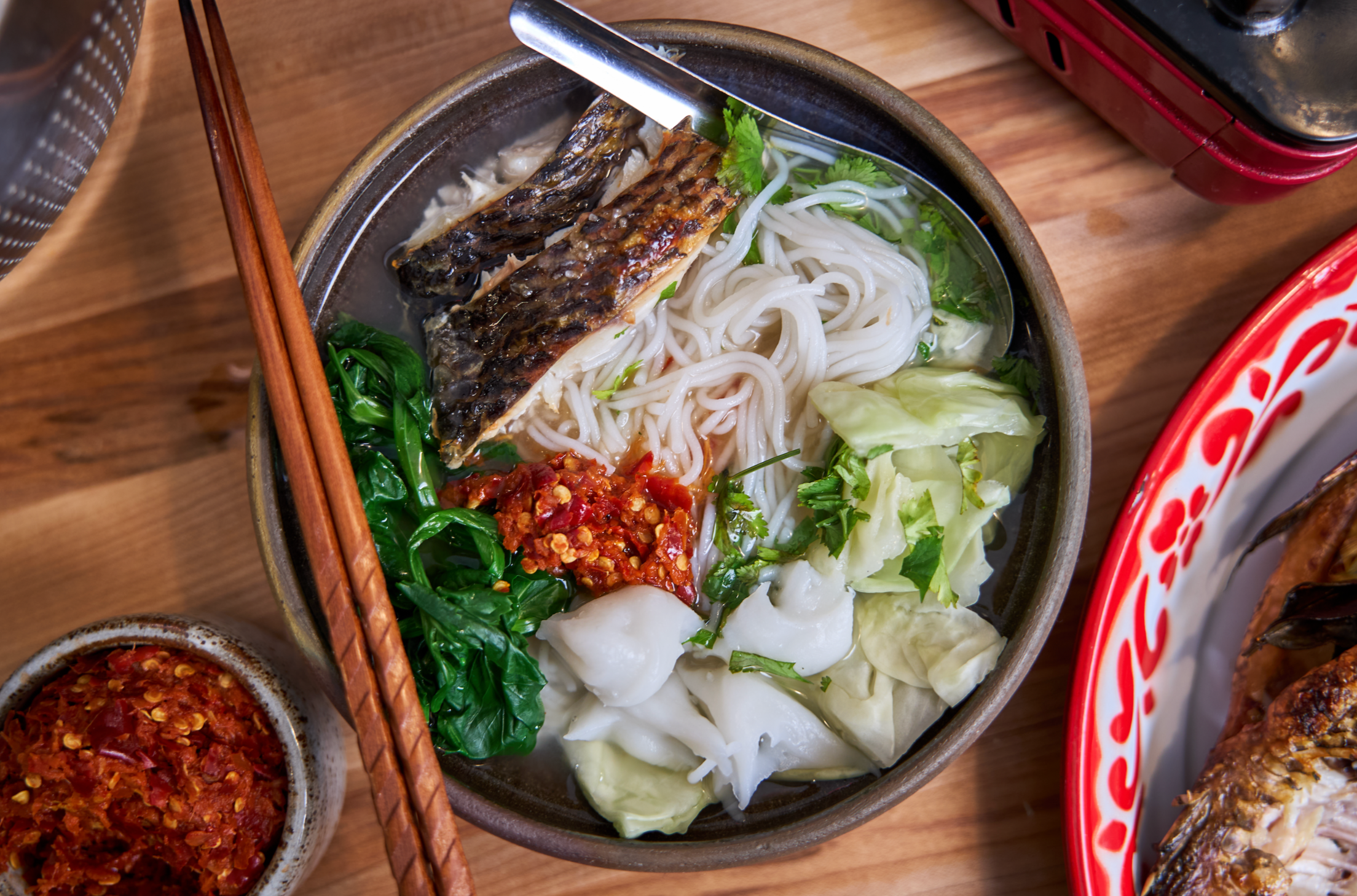
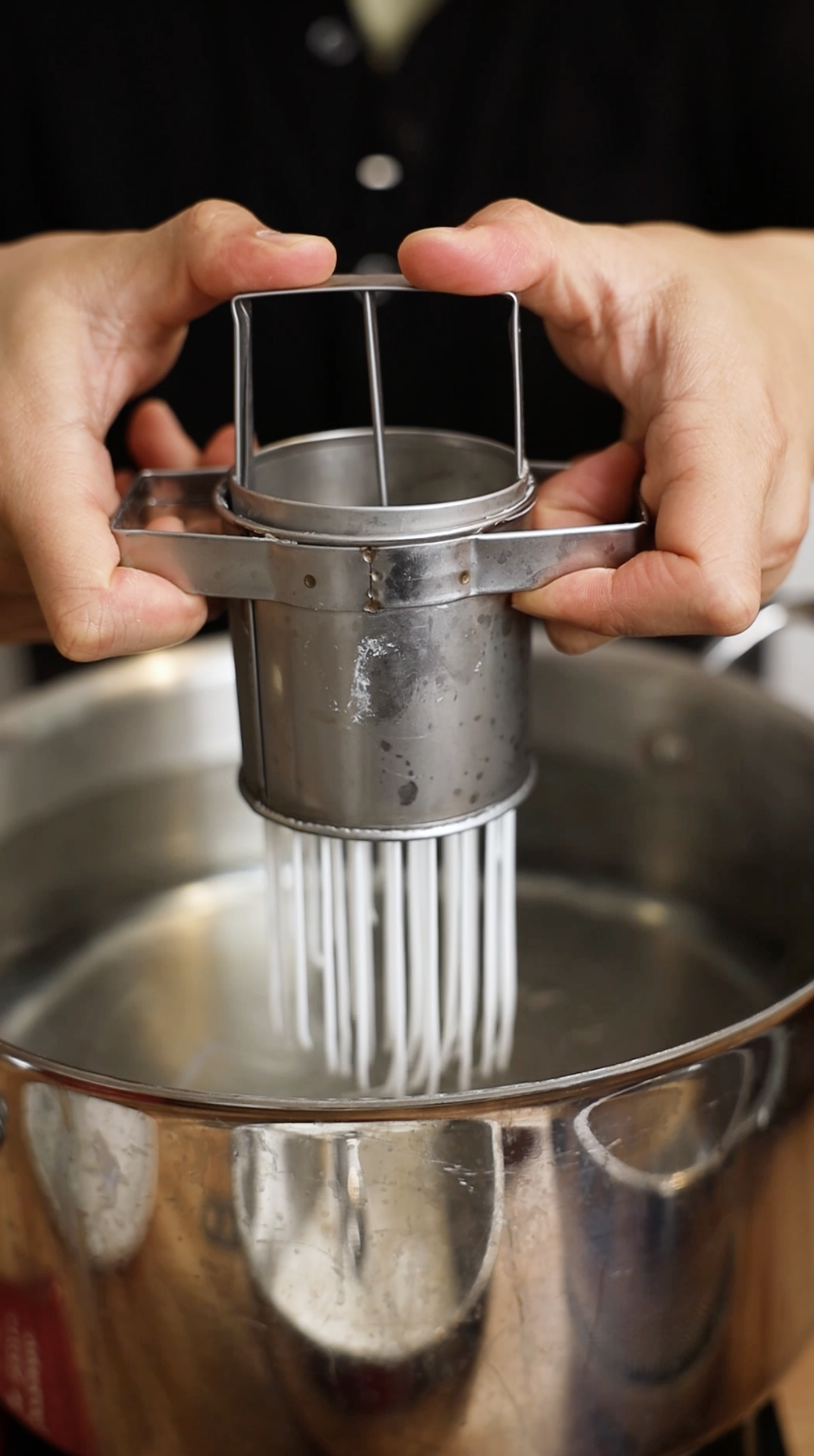
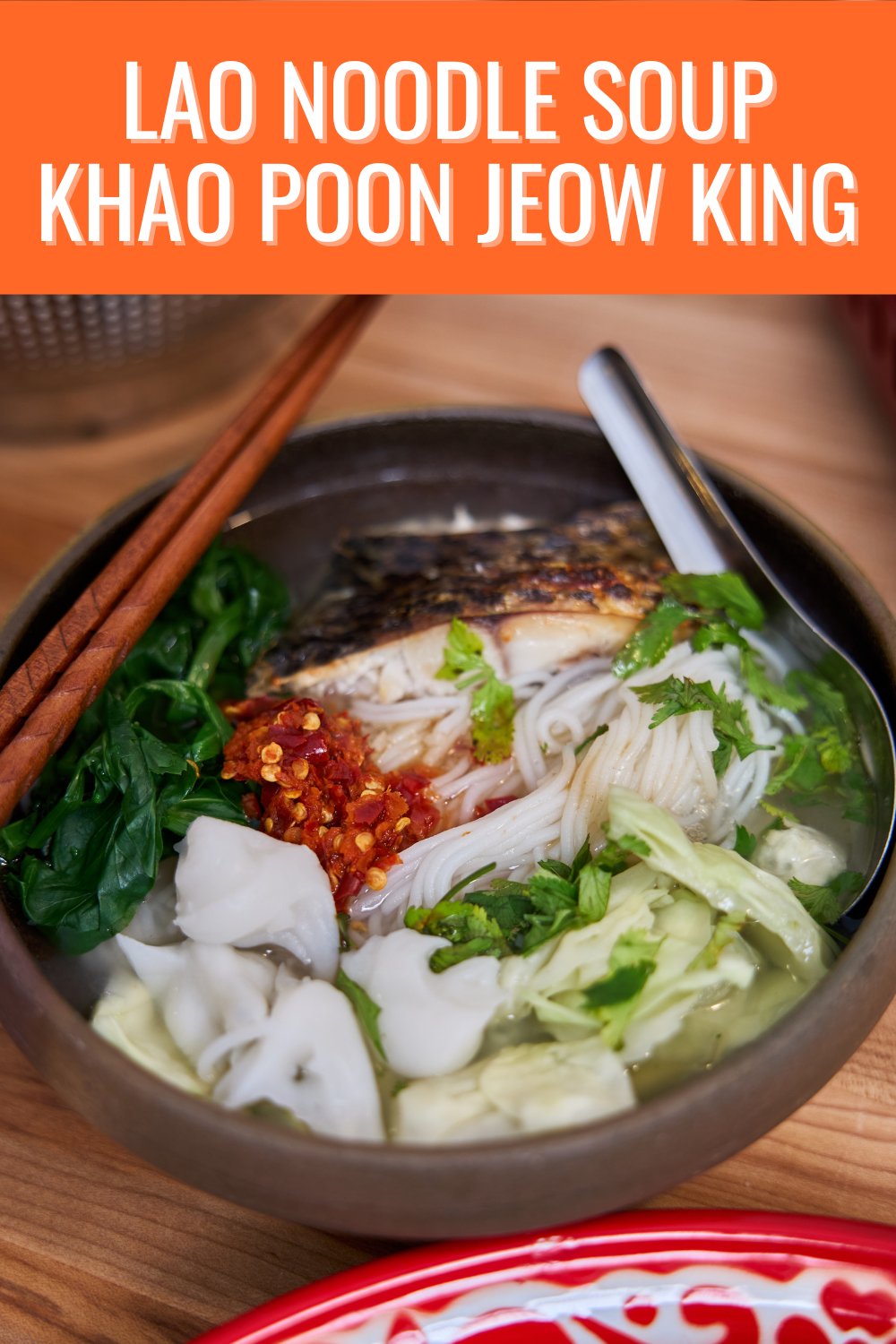
Khao poon jeow king is a versatile Lao noodle soup you can tailor to your taste: make it extra spicy with the ginger dipping sauce, deepen the funk with a generous splash of padaek (fermented fish sauce), or add more blanched vegetables for extra crunch. The dish’s name comes from the ginger dip spreading into the broth and meeting the fish-sauce funk. It’s commonly served with grilled fish and barbecued chicken. In Laos you’ll find restaurants that focus solely on this dish, because it’s built from several distinct components. One of my favorite experiences is watching vermicelli noodles made fresh in front of you; when you reach the end of the bowl, the thicker strands formed by gathering the leftover rice paste with your fingers are especially satisfying and nothing goes to waste.
What are the special equipments needed?
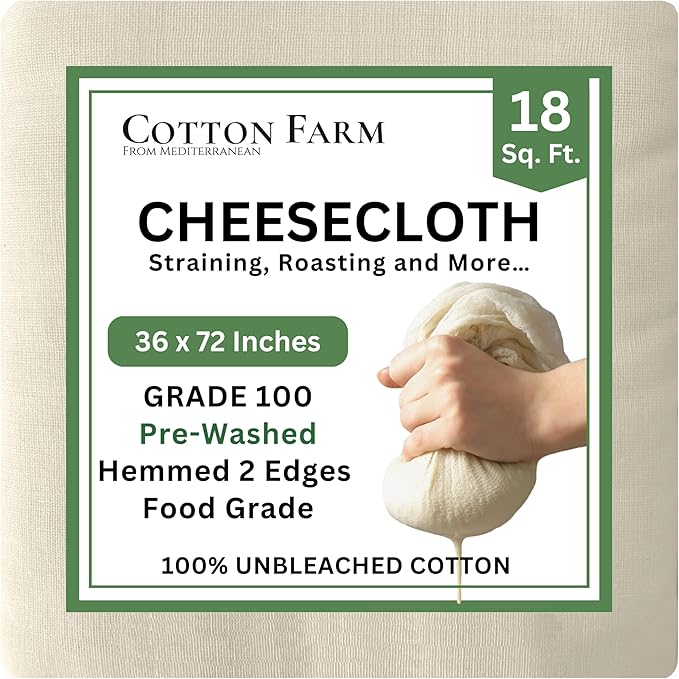
You can make the rice paste by hand in a large bowl, but it’s slow and labor-intensive. The easiest method is to use a KitchenAid stand mixer. You’ll also need a cheesecloth to press the paste through, which ensures a soft-serve–like texture. The tool I’m using to push the noodles through is one I brought from Laos.
Ingredients Needed for Lao Ginger Noodle Soup | Khao Poon Jeow King
jasmine rice flour: the main type of rice flour to create the noodles
mung bean flour: this flour helps make the noodle bouncy
salt: this will season the noodles
young ginger: it easily gets smashed into a paste. If you can’t get access to young ginger, you can use older ginger.
dried birds eye chili peppers: smash it for the spice
MSG: adds umami to the dish
whole tilapia: use a whole fish with the bones and make sure its scaled and gutted
lemongrass: stuff it into the fish cavity
kaffir lime leaves: the other ingredient stuffed into the fish cavity
cabbage: blanch the vegetable to give texture in this dish
pea shoots: blanch the vegetable to give texture in this dish
Padaek: adds the deep funky flavors
Fish sauce: adds more layered saltiness to the dish
Cilantro: used to garnish the dish
Hot Khao poon water: its a thicker water after the noodles have been cooked in it
Step by Step Instructions
Mix the Flours
Cook the Flour
Mix with a Stand Mixer
Filter with a Cheesecloth
Cook the Noodles
Cool and Bundle the Noodles
How Long Will It Last?
Because these are fresh vermicelli noodles, they will last for 2 to 3 days. It is best eaten fresh!
Where can I get more Lao recipes?
If you enjoyed this recipe, chances are you love Lao food. My website is filled with traditional, modern, and fusion Lao recipes, so I hope you take some time to explore everything it has to offer. When you try a recipe, leaving a rating and a comment on that specific page helps more home cooks discover and trust it. And if you want ad-free, refined recipes, please consider pre-ordering my debut cookbook, The Lao Kitchen. It’s jam-packed with over 95 recipes, personal stories, and rich Lao food history.
More Lao Recipes

Lao Ginger Noodle Soup | Khao Poon Jeow King
Khao poon jeow king is a popular Lao noodle dish that highlights bold, fresh flavors. It features freshly made vermicelli noodles tossed with a spicy young ginger dip, then seasoned with padaek and fish sauce. The noodles are served with grilled tilapia and blanched vegetables, creating a balance of heat, saltiness, and freshness in every bite. What makes this dish special is the soft, just-made vermicelli noodles that soak up all the flavor. It is a quick and customizable meal that you can adjust to your spice preference and toppings.
Ingredients
Instructions
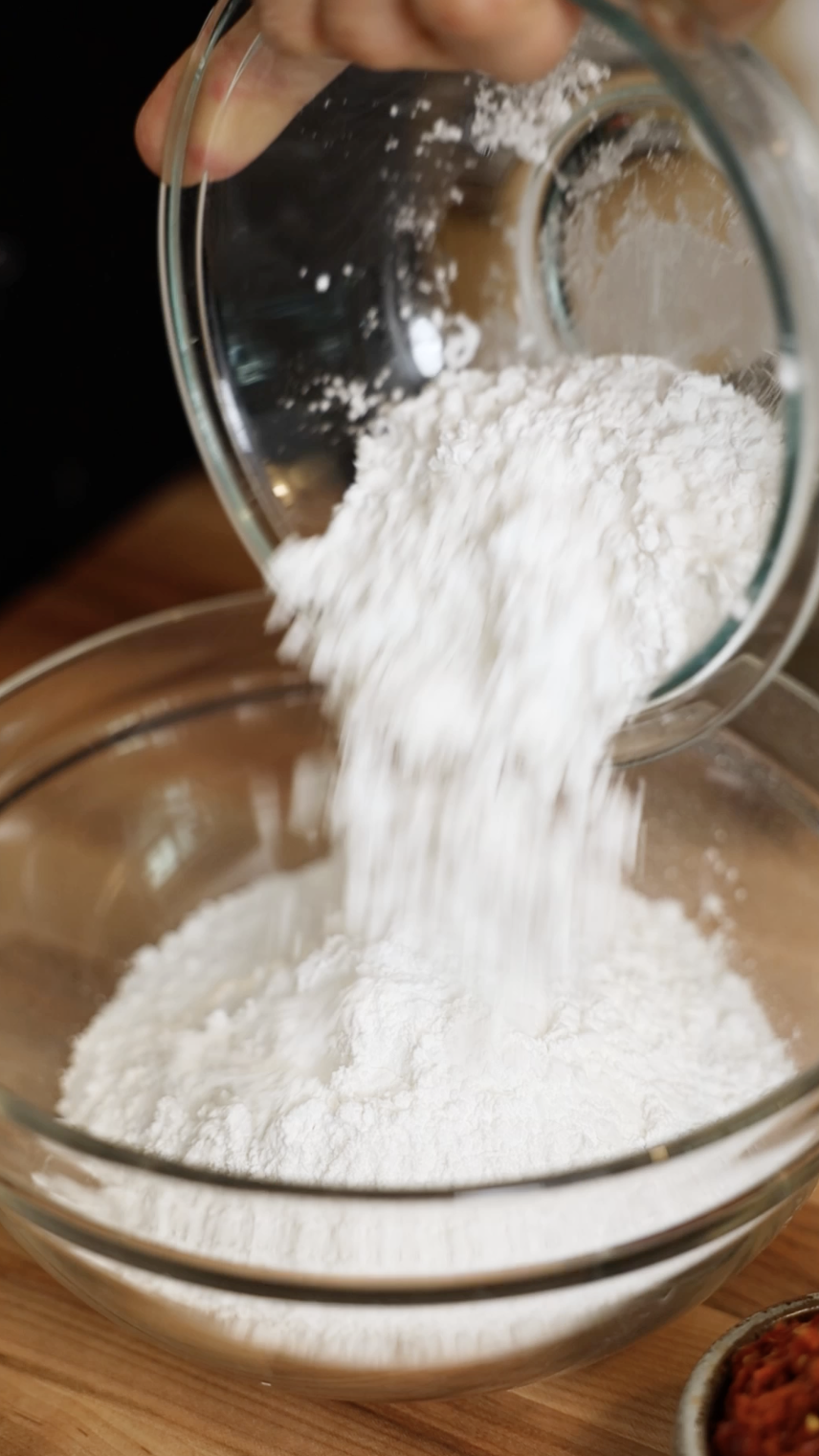
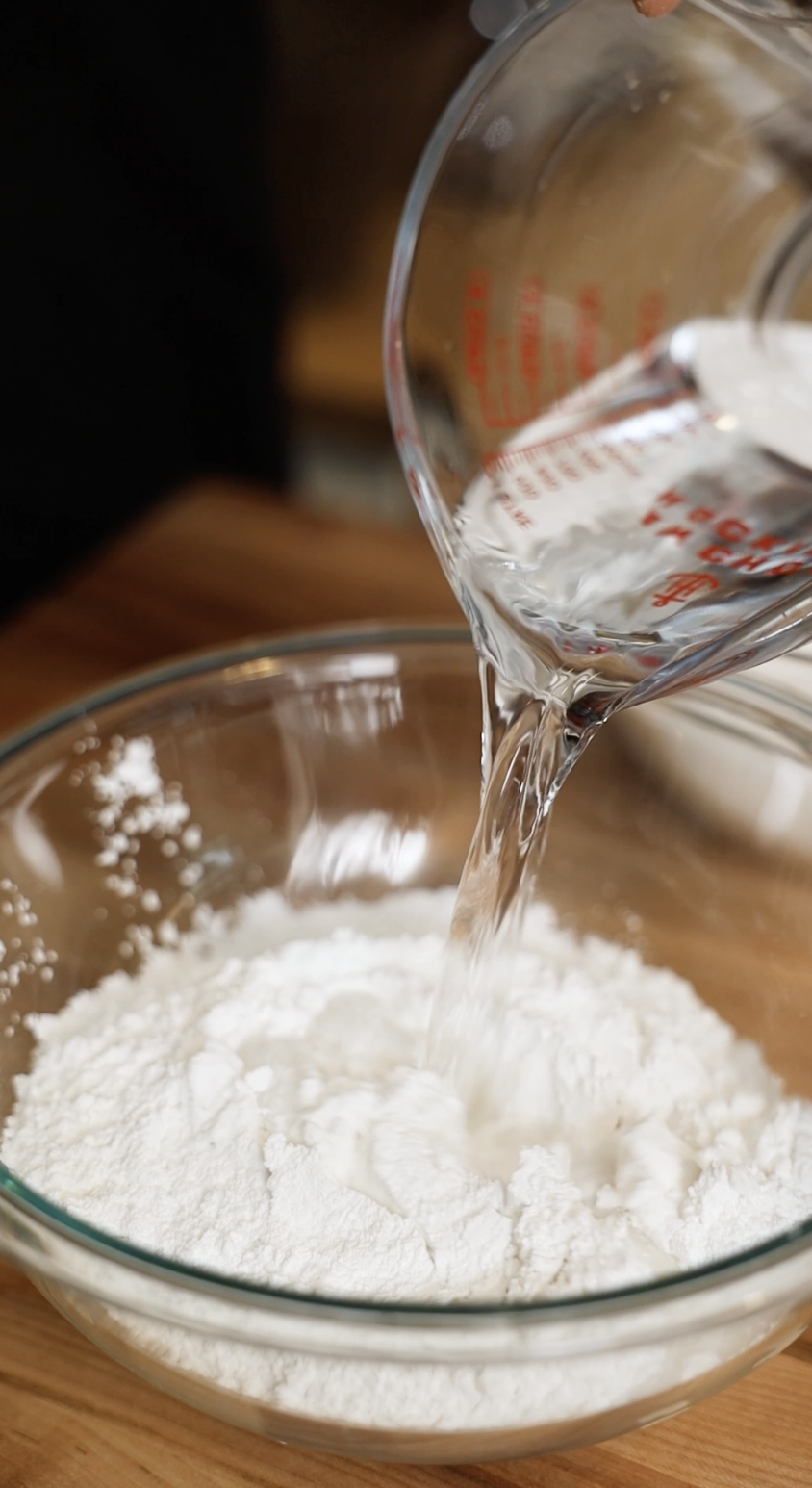
- In a large mixing bowl, add the jasmine flour and mung bean flour and mix well. Place half of this mixture (240g) in another mixing bowl.
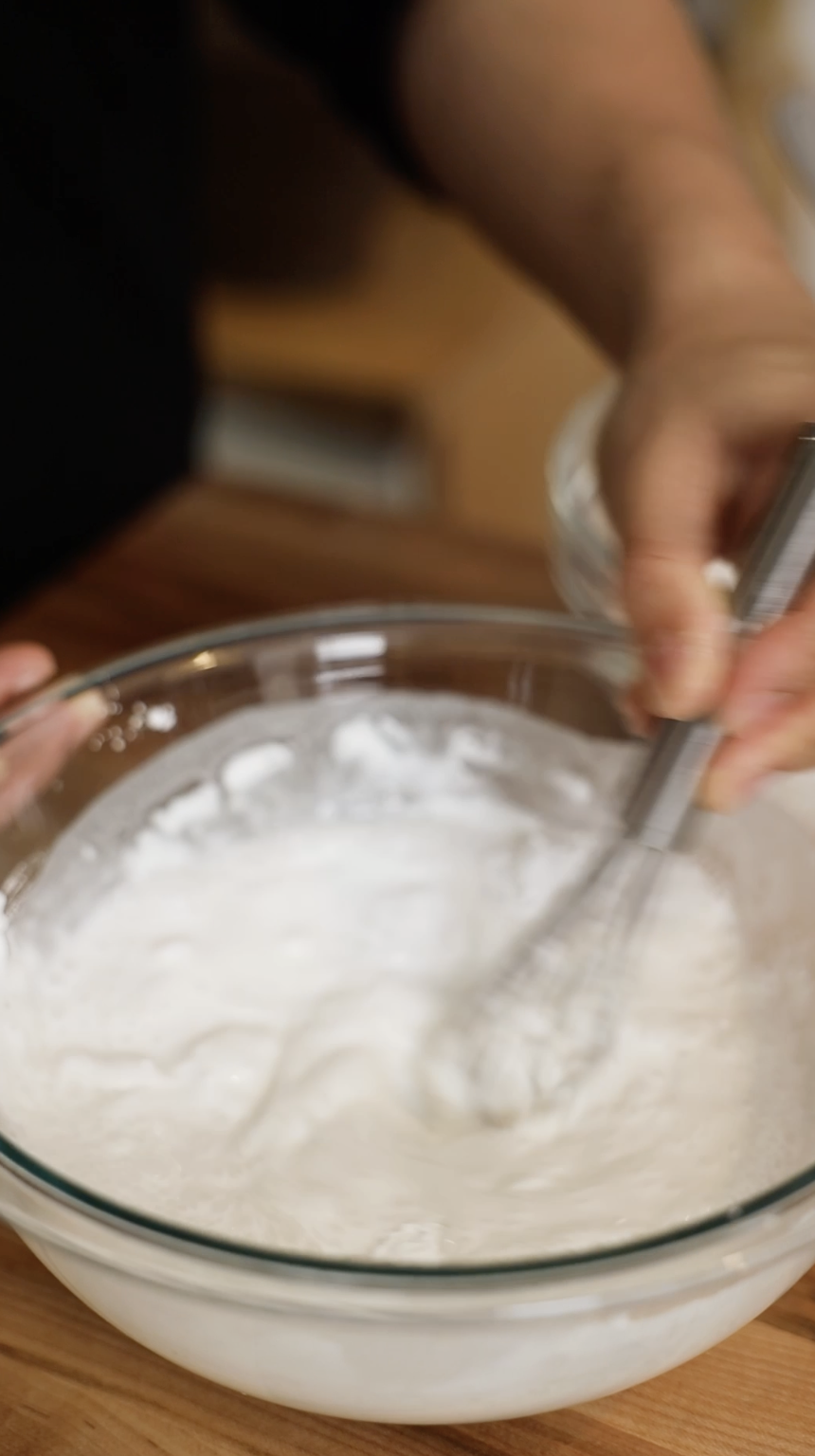
- In one of the mixing bowls with half of the flour mixture, add salt and 400g water and whisk.
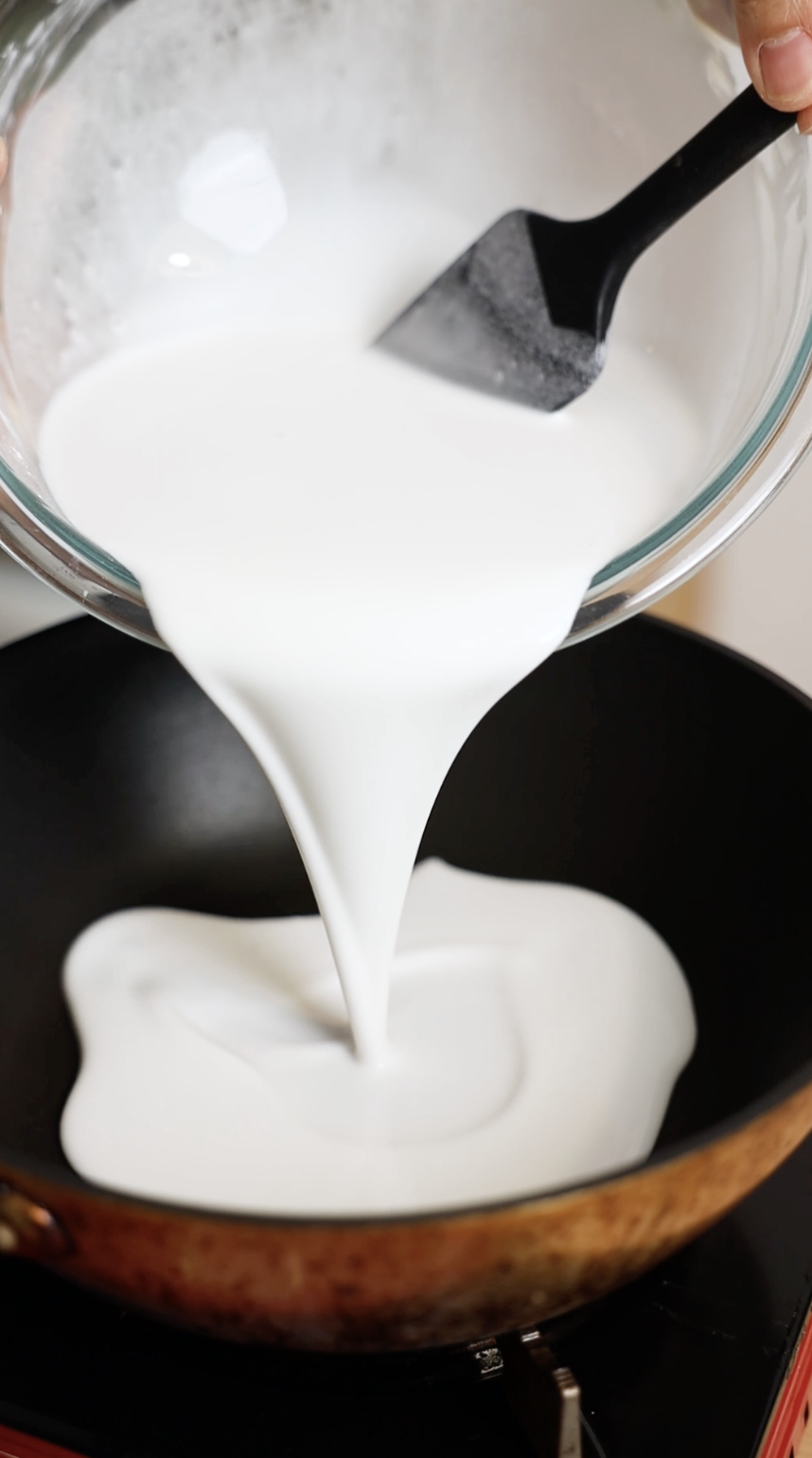
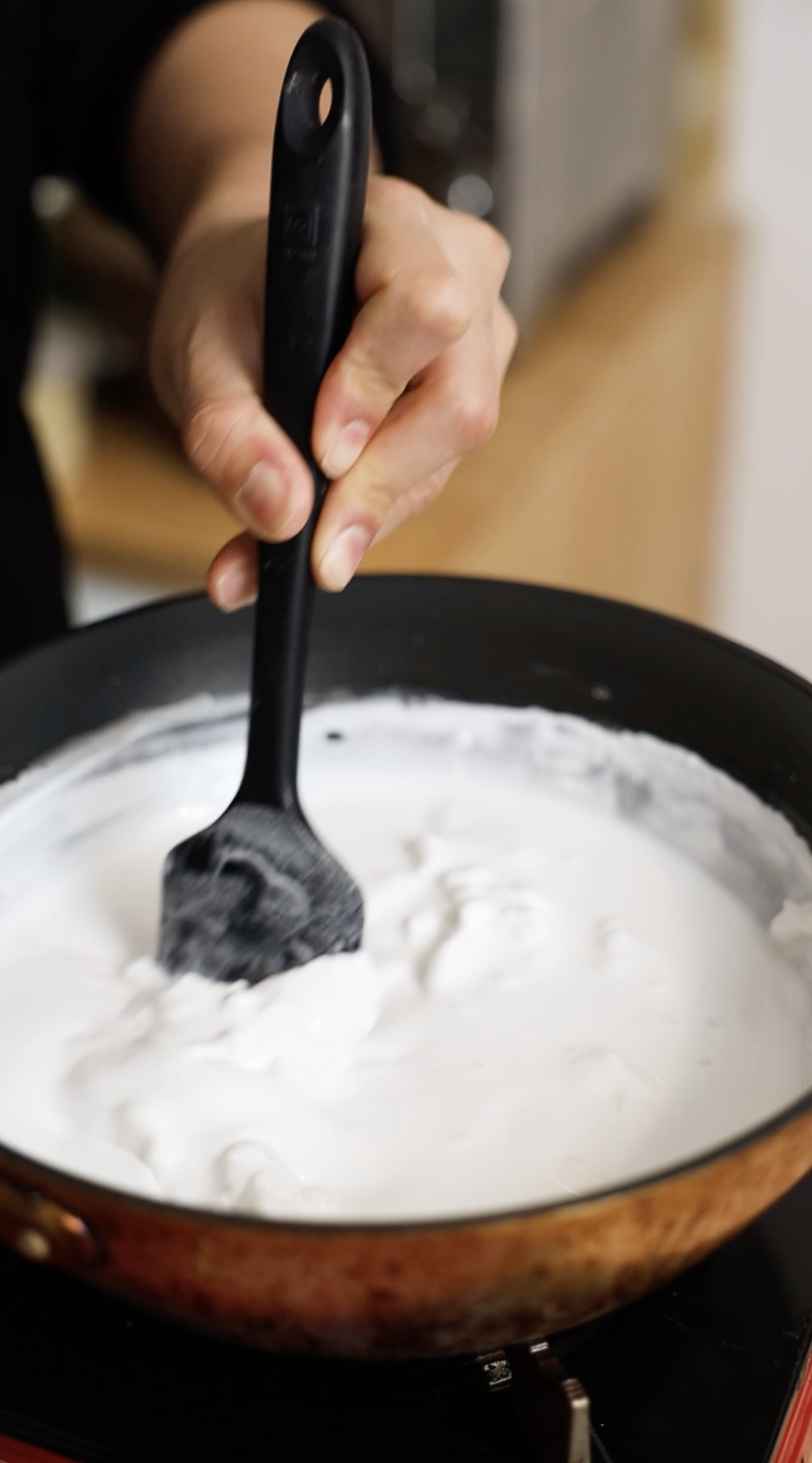
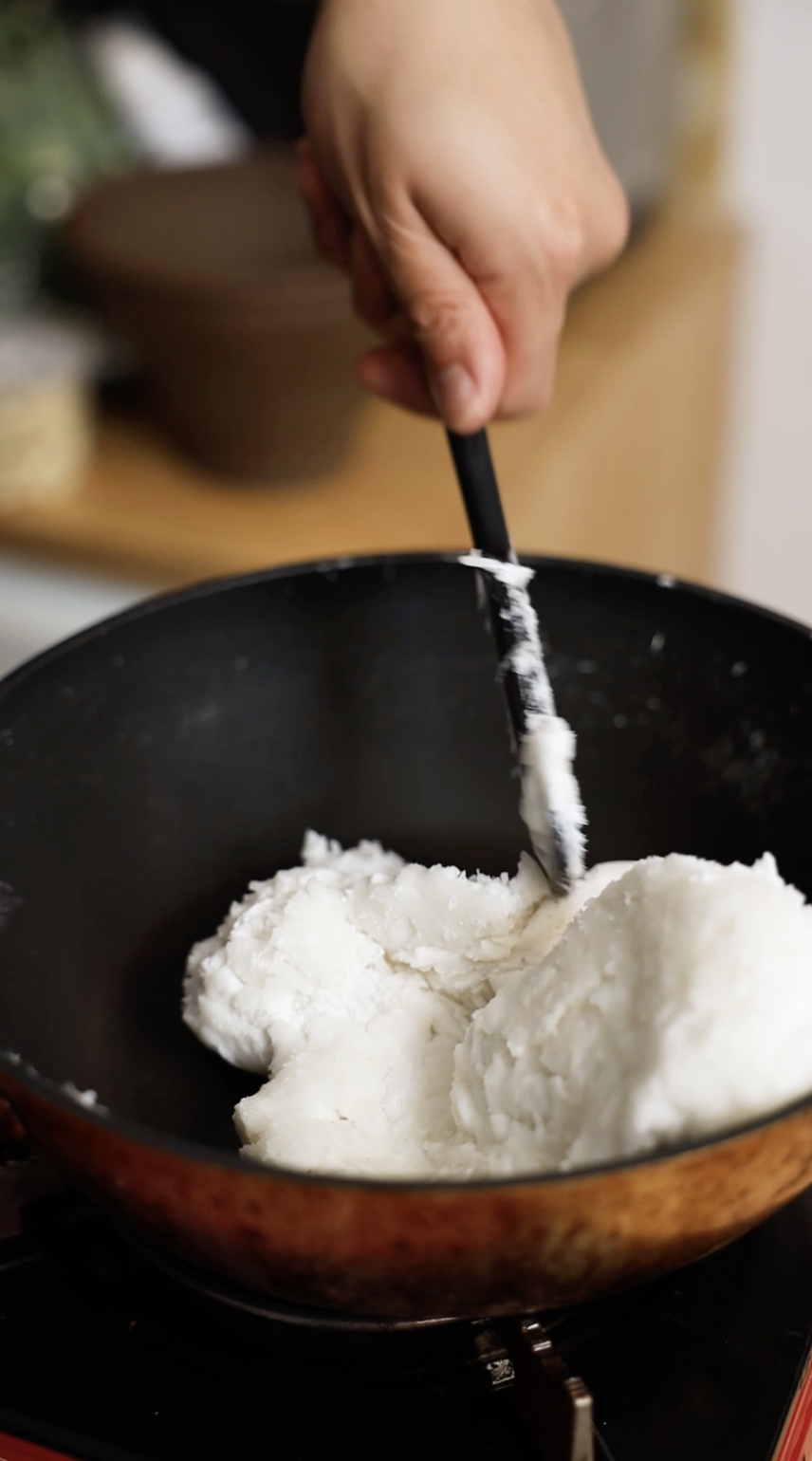
- Place the wet mixture in a large pot and turn it on medium heat and cook for 3 to 4 minutes until it becomes a dough.
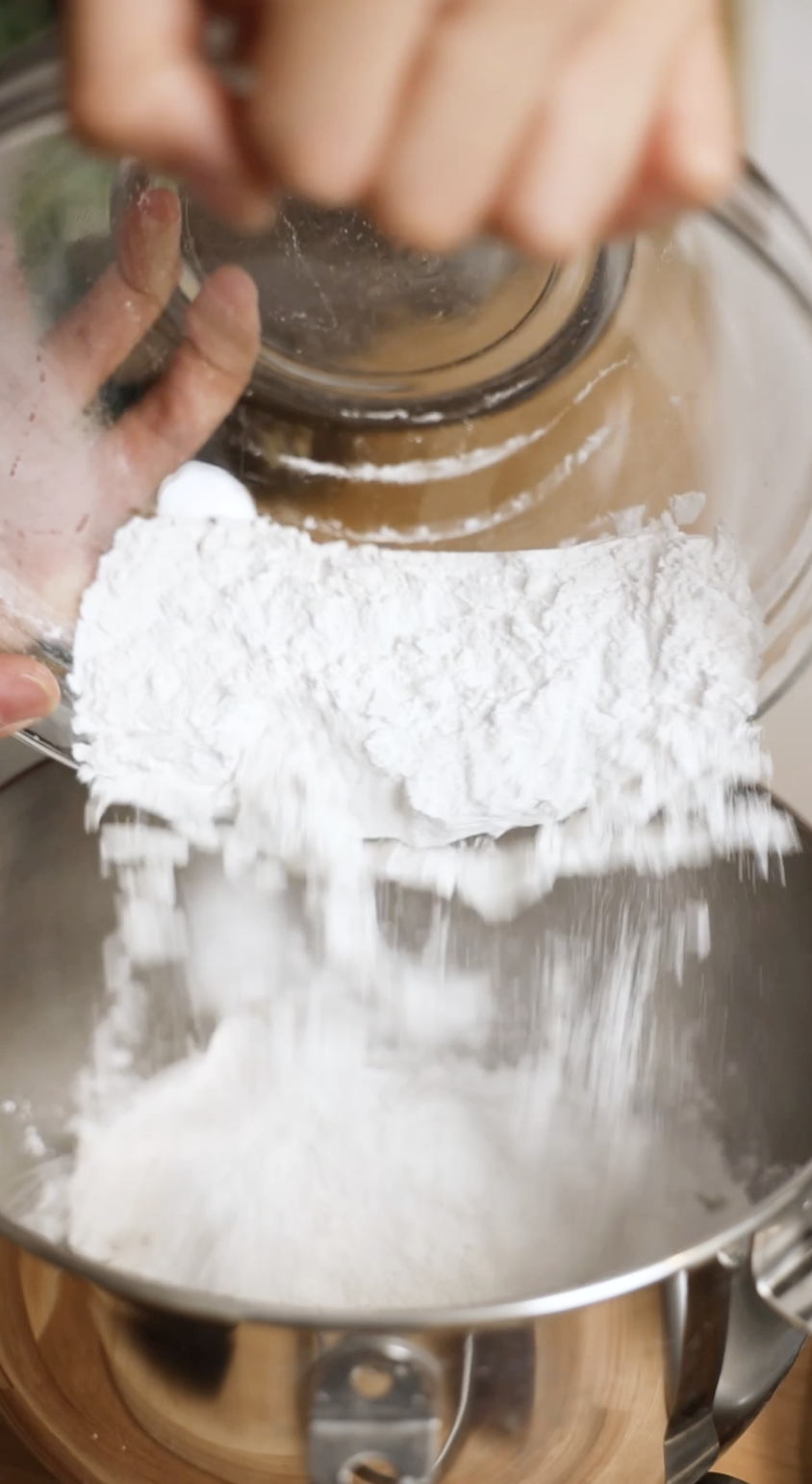
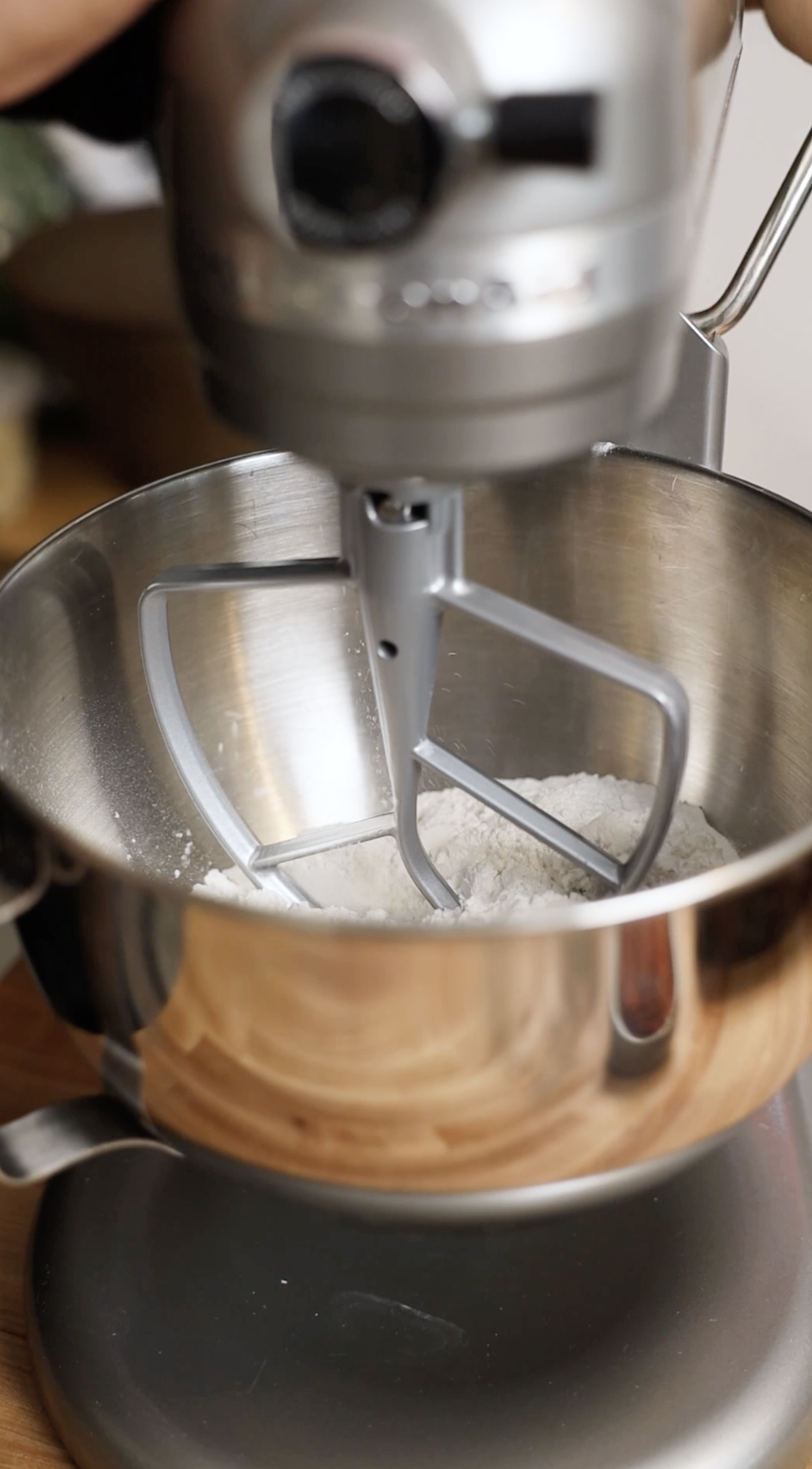
- In a kitchen aid bowl, add the other half of the flour mixture and add the cooked dough. Using the paddle attachment, mix on low speed until it becomes a crumbling mixture.
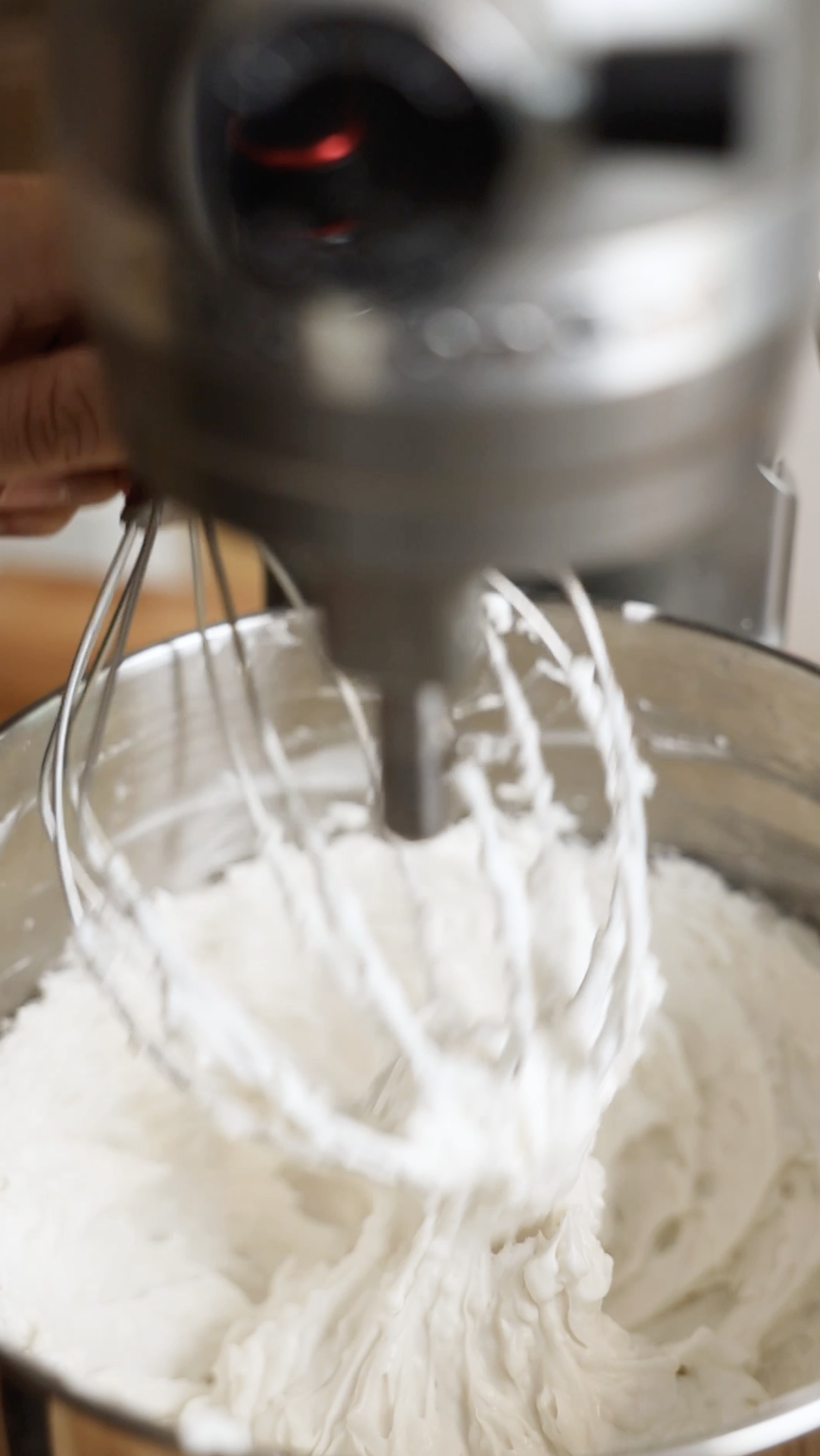
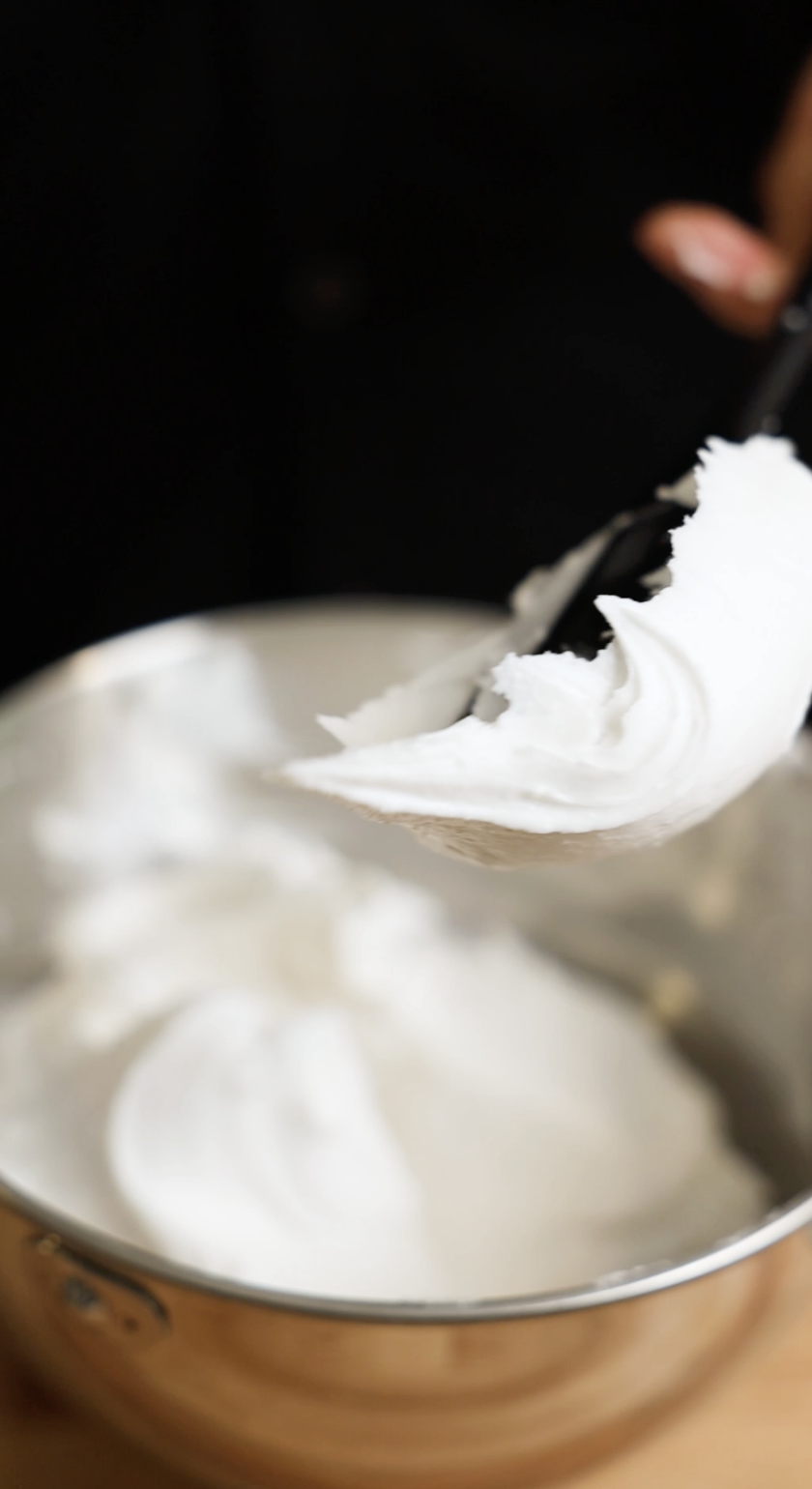
- With 500g of water, slowly add the water until it starts to clump up and become looking like soft serve. Once it becomes a soft serve texture, use the whisk attachment to finish the mixing. You may not need all 500g of water so watch it carefully.
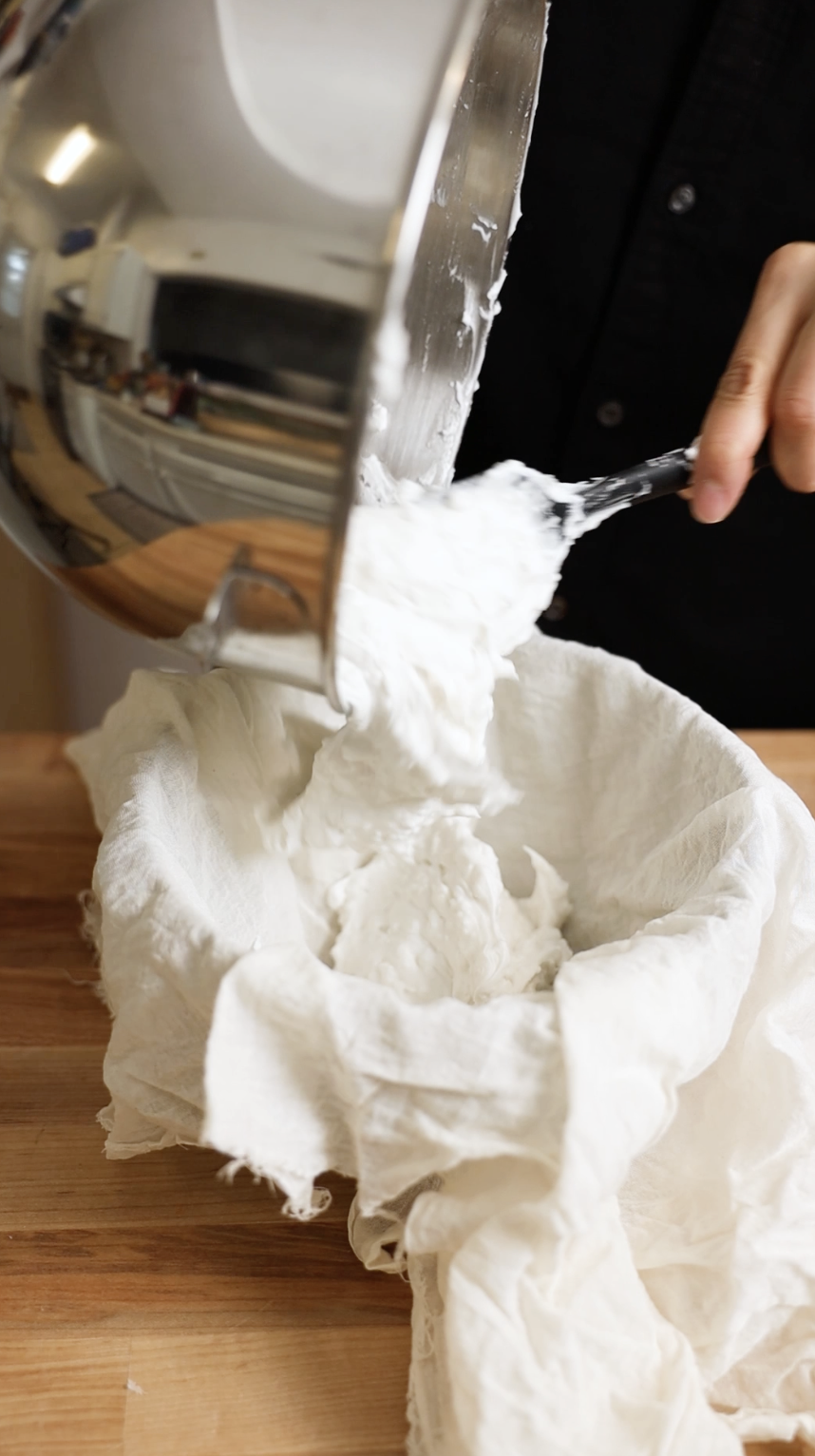
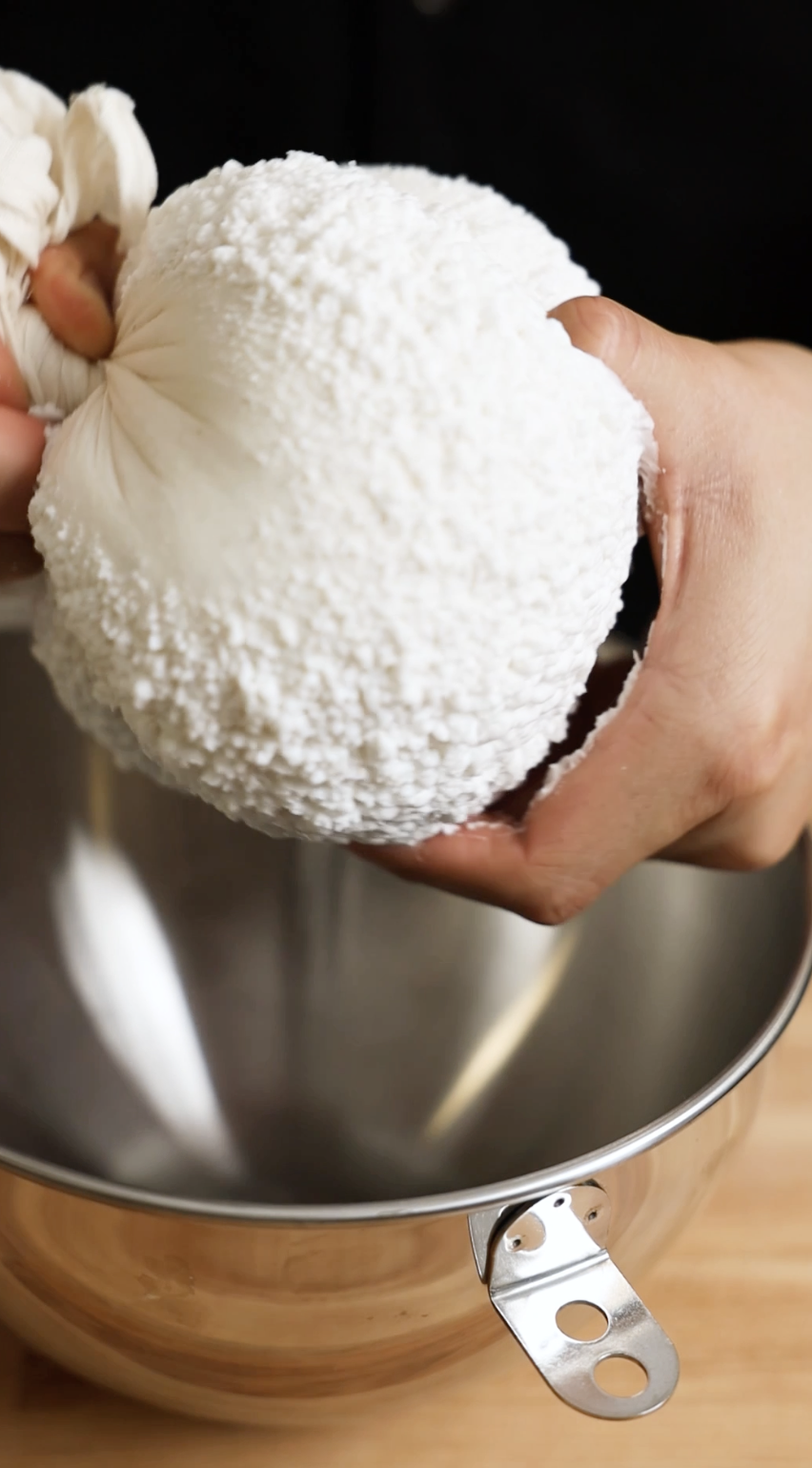
- With one layer of cheesecloth placed in a large bowl, add the soft serve flour mixture in and twist and squeeze out the mixture through the cheesecloth. Use a silicone spoon to remove the mixture that sticks to your hand.
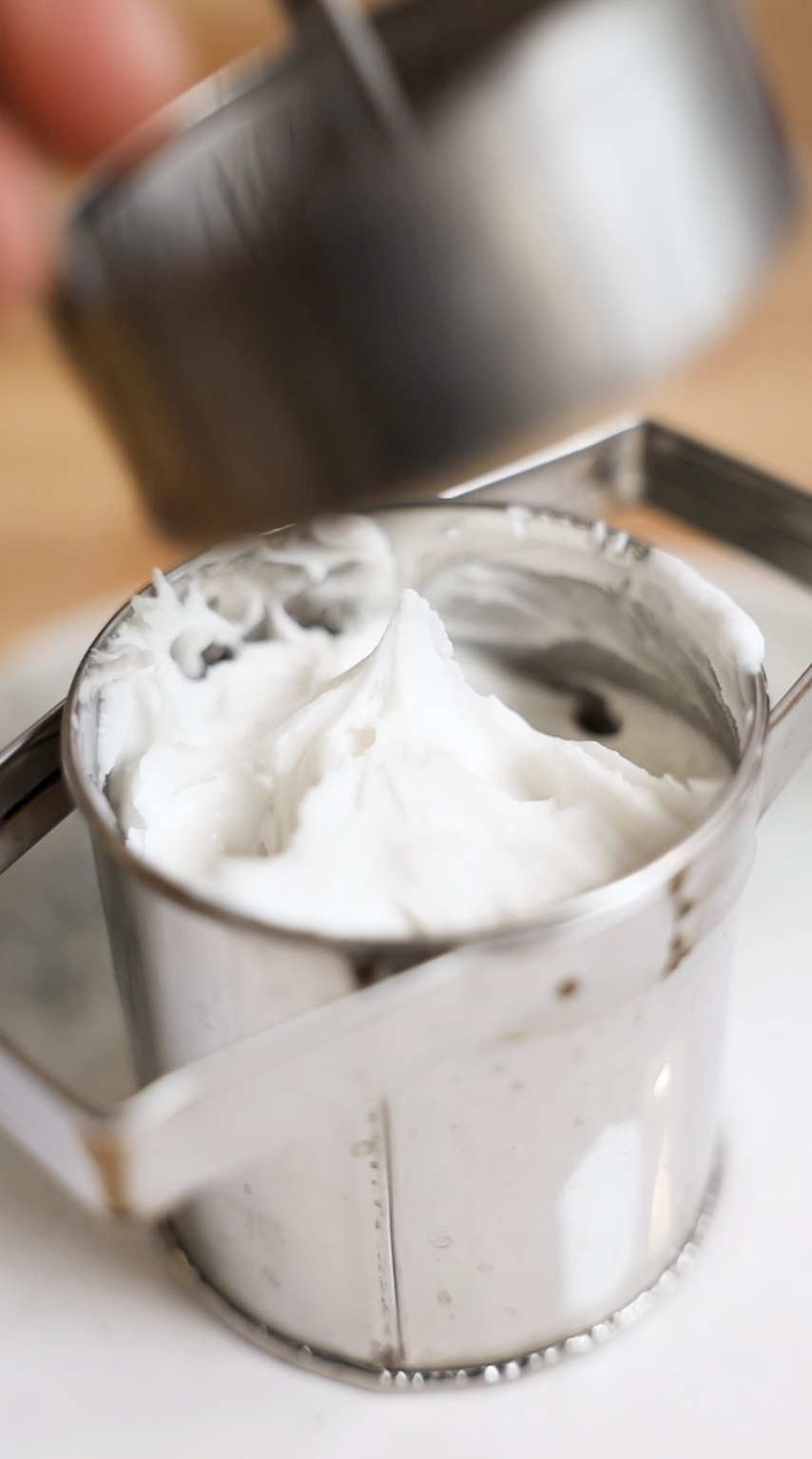
- Get a large stock pot of water to a boil and then turn it down to low. Add enough of the soft serve into a noodle press or potato ricer. Using a spoon, gently mix the water so it swirls. As the water is swirling, quickly squeeze out the soft serve until it is all out.
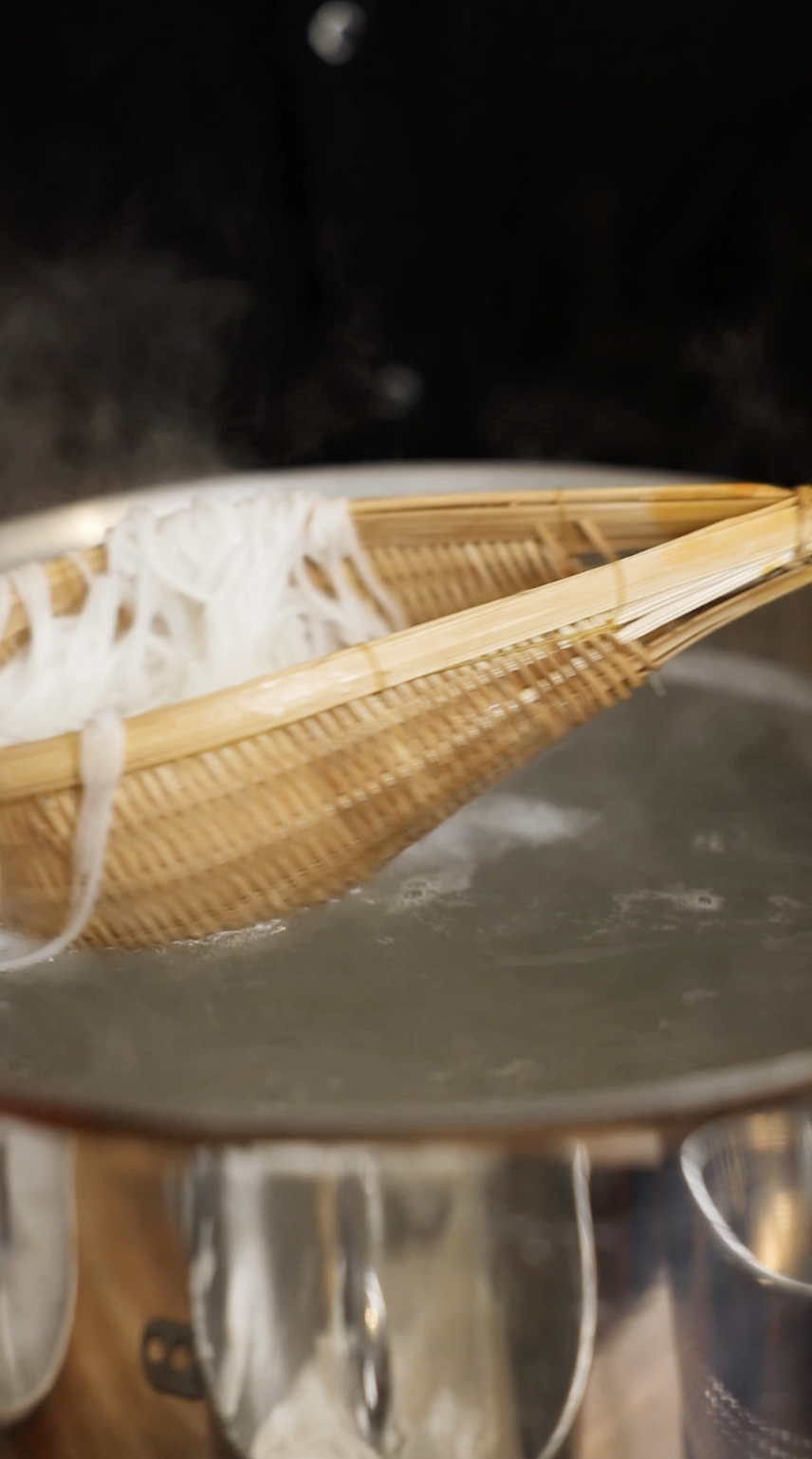
- Turn the heat back up to high and cook for about 1 minute and 30 seconds until the noodles float.
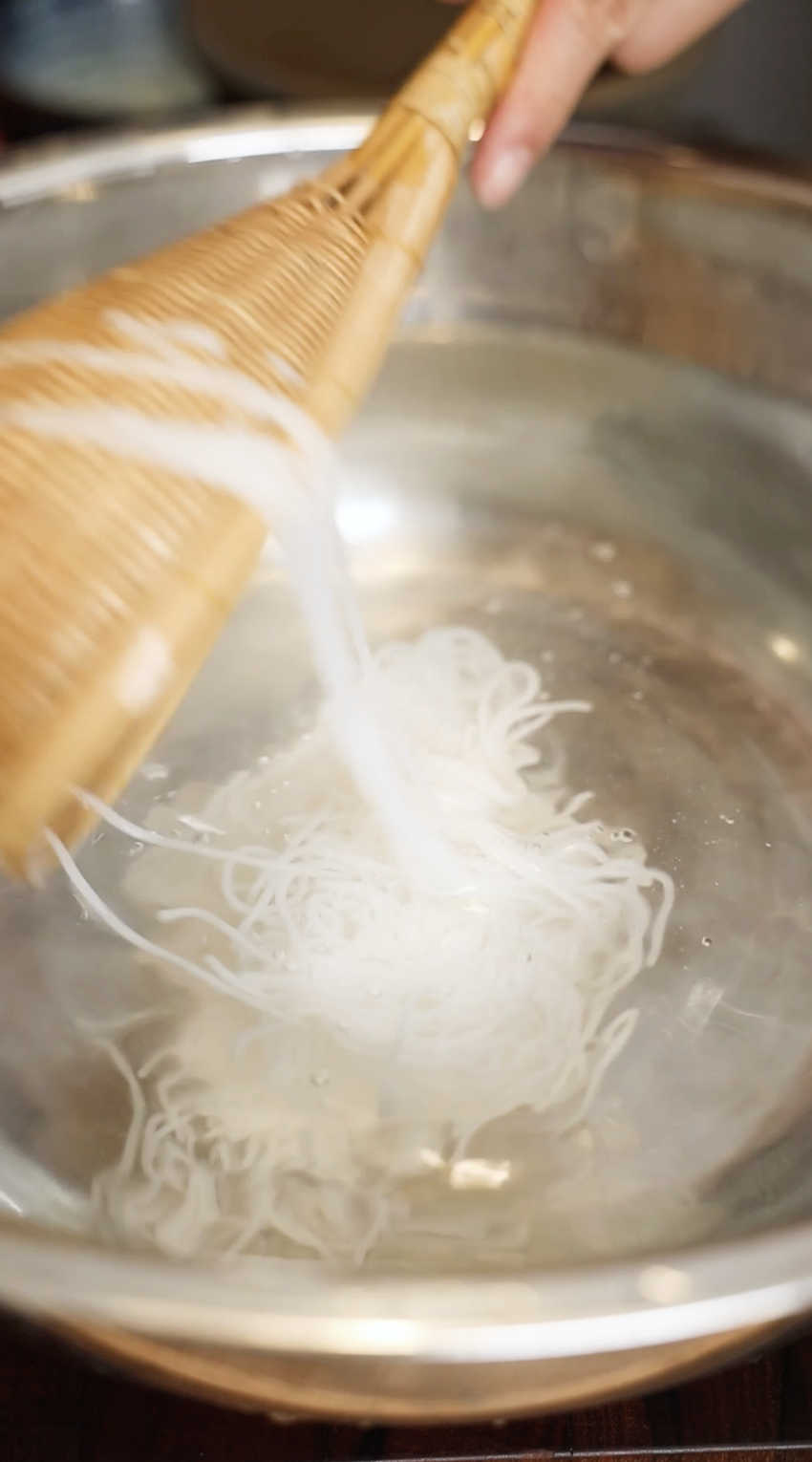
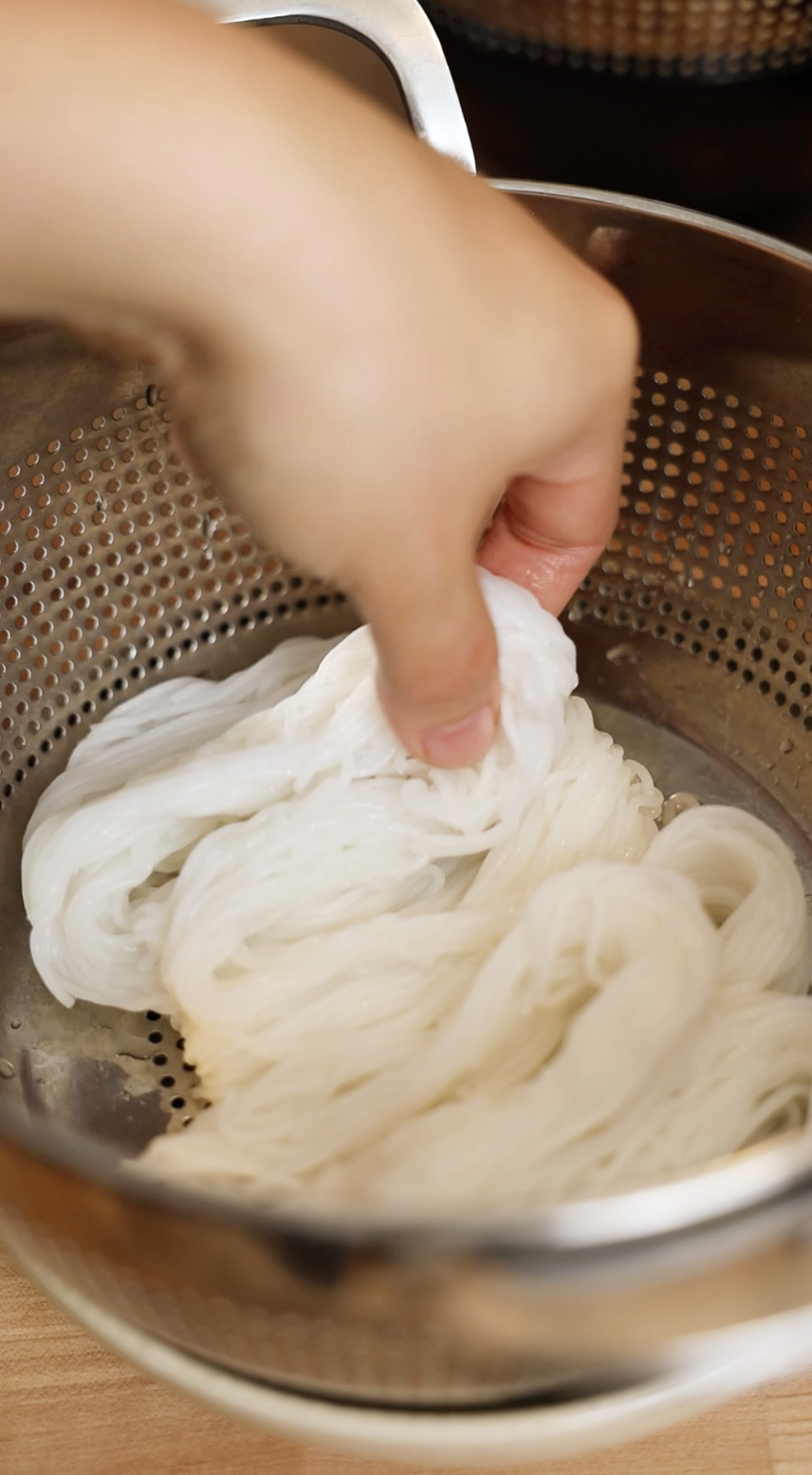
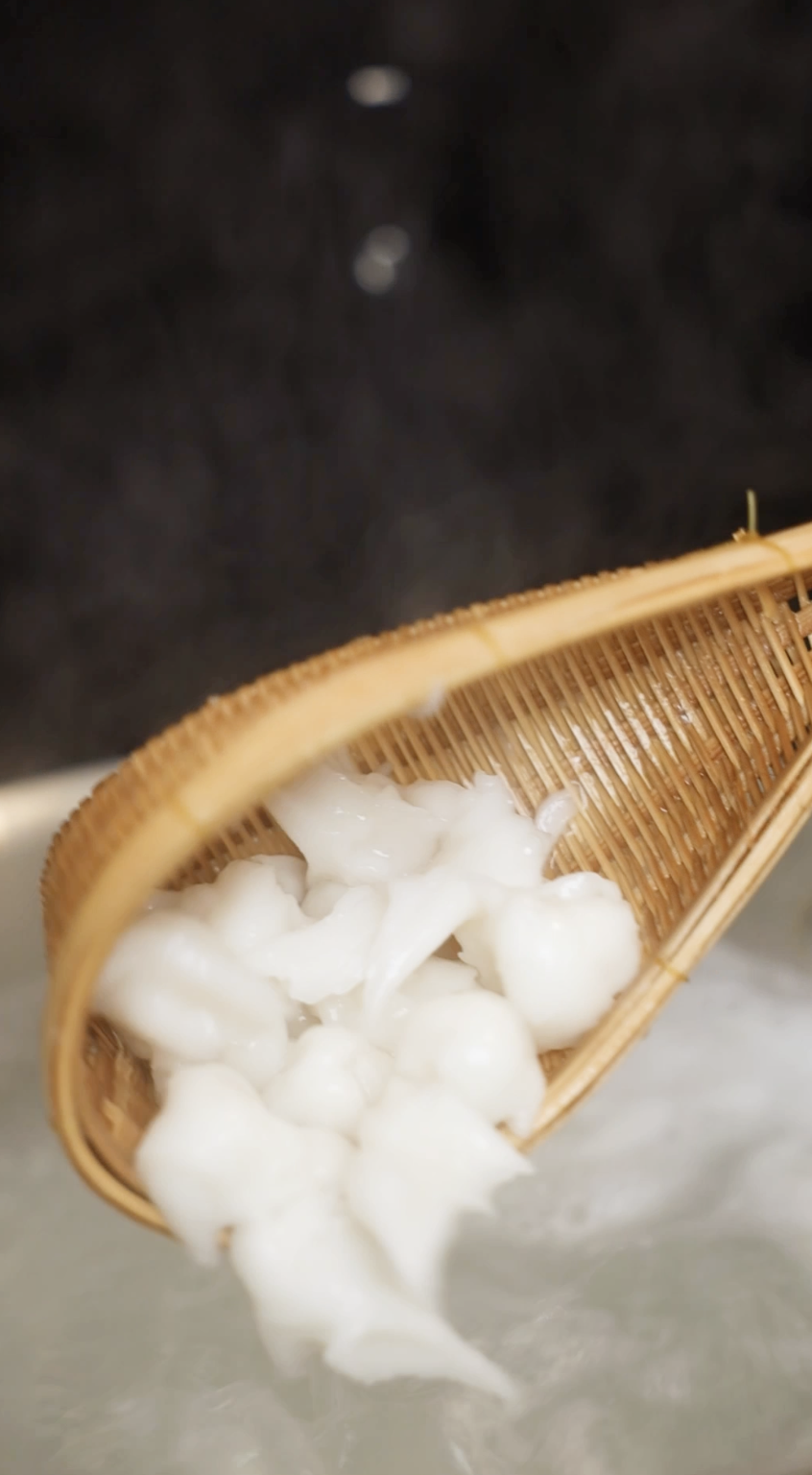
- Gently with a sieve, get all the noodles and then place it in a cold water bath for a few seconds. Using your hands, get the strands and place them in a strainer to dry.
- After all the noodles are done cooking, save the water that the noodles are cooked in for assembly later.
- Add the chopped young ginger and dried peppers to a mortar.
- Pound and smash until you form a rough, textured paste.
- Add the salt and MSG.
- Mix and pound again briefly to combine evenly.
- Preheat oven to 400°F.
- Pat the tilapia completely dry with paper towels.
- Using a sharp knife, make 3 to 4 diagonal slashes on each side of the fish, cutting down to the bone.
- Season both sides of the fish evenly with salt and MSG, including inside the cavity.
- Stuff the cavity with the smashed lemongrass and kaffir lime leaves.
- Lightly spray or rub the outside of the fish with oil to help it crisp.
- Place on a baking tray and roast at 400°F for 40 minutes, or until cooked through.
- Increase the heat to 500°F and broil for 2 to 4 minutes to crisp the skin. Watch closely so it does not burn.
- Place a generous portion of fresh vermicelli noodles in a large serving bowl.
- Top with the blanched cabbage and pea sprouts.
- Add jeow king to taste, depending on your spice preference.
- Season with a small spoonful of padaek and a splash of fish sauce.
- Add pieces of baked or grilled fish on top.
- Garnish with fresh cilantro.
- Pour hot khao poon broth over everything and serve immediately.



Sabaidee, I’m Saeng!
I’m a personal chef who specializes in Lao food. Here at Saeng’s Kitchen, you’ll find all your favorite traditional Lao foods and also some new twists to Lao style dishes.