Lao Sandwich | Khao Jee Pâté
Introduction to Lao Sandwich | Khao Jee Pâté
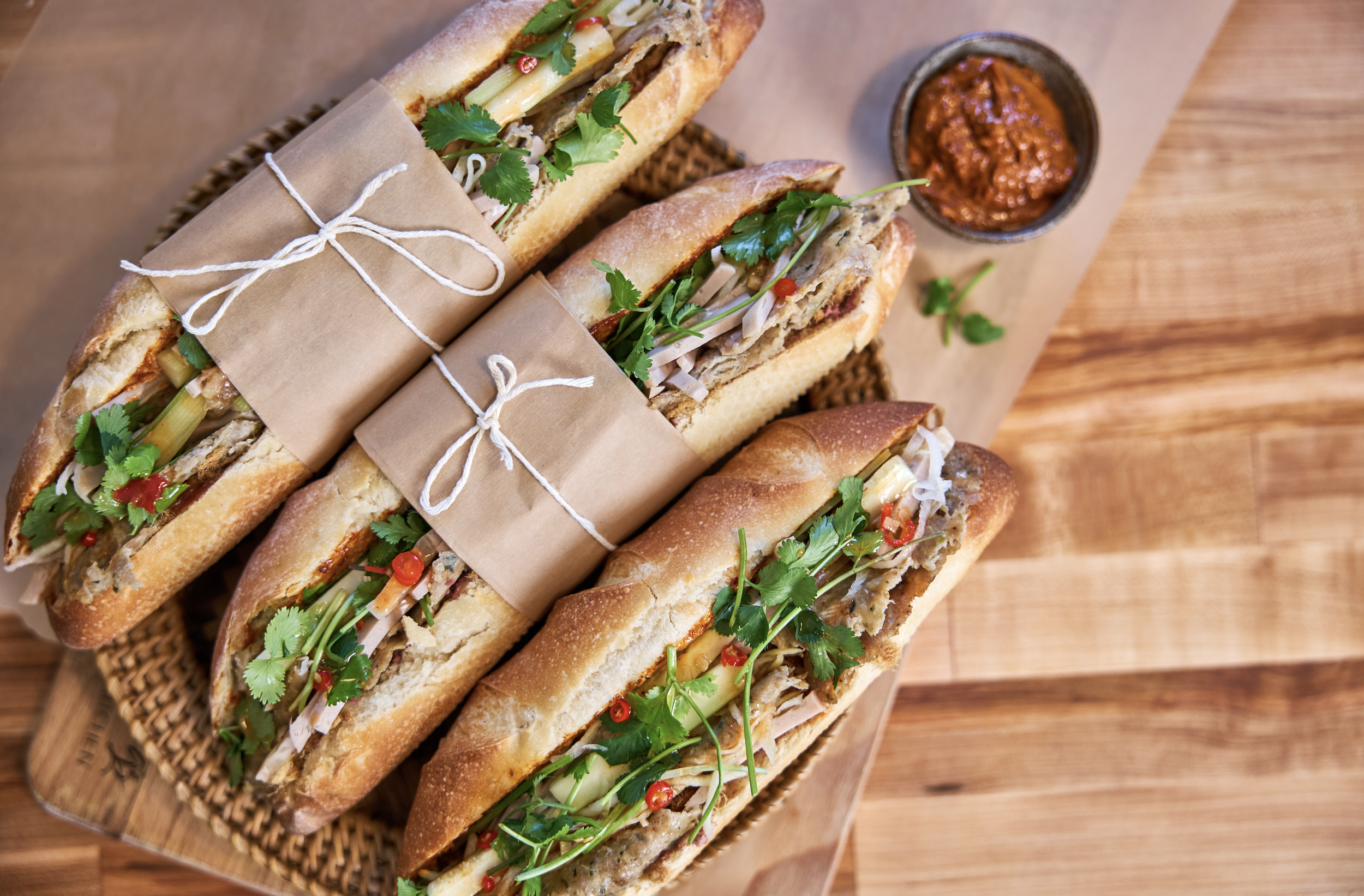
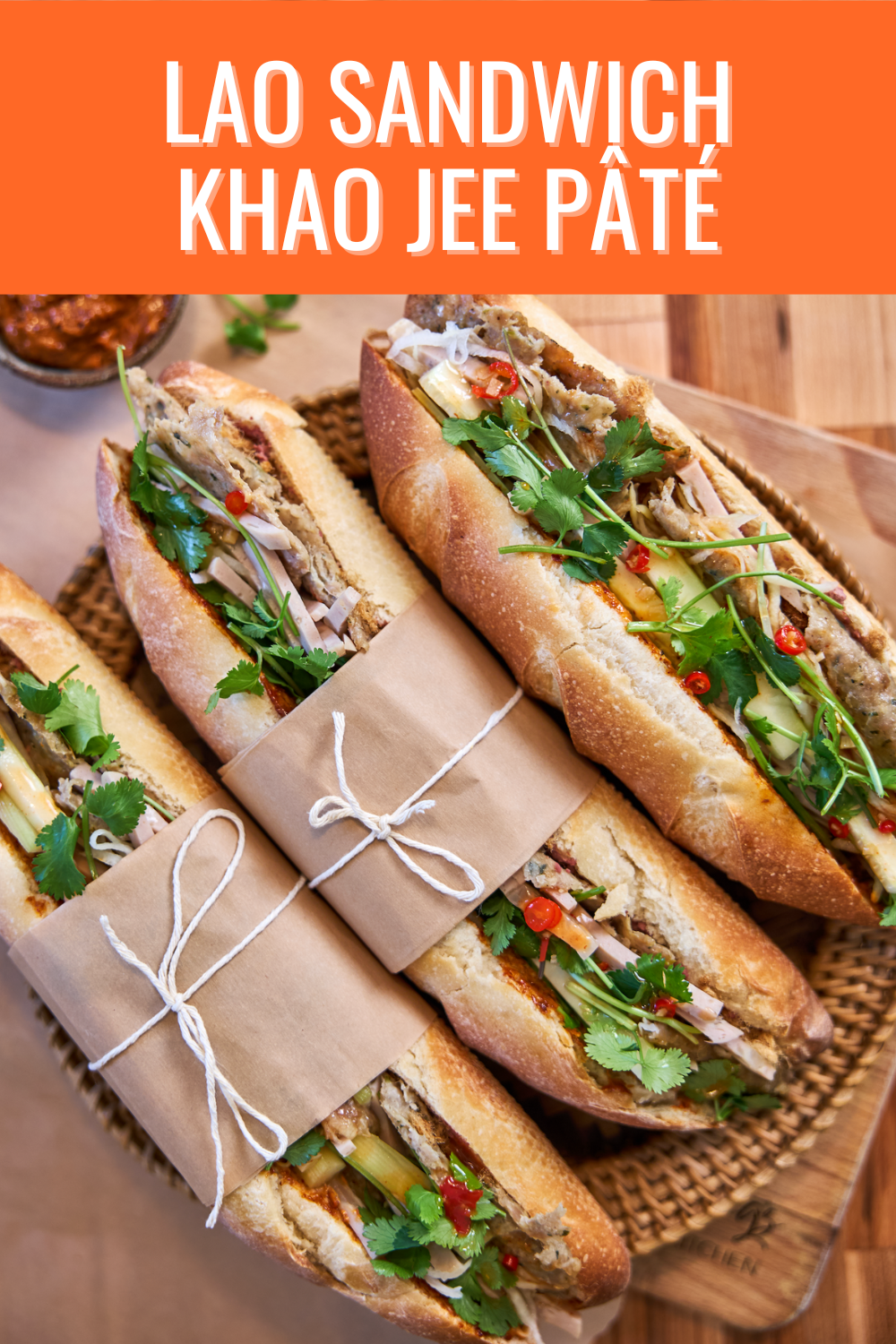
The Lao sandwich is a staple in Laos, enjoyed just as widely as papaya salad and sticky rice. At night markets across the country, you’ll find vendors selling their own versions of khao jee pâté. While it may look similar to its neighboring sandwich, bánh mì, don’t be fooled. This Lao sandwich has its own distinct flavors, ingredients, and identity, and it’s one you’ll want to add to your sandwich list.
Khao jee pâté is known for its generous spread of pâté, a layer of mayo, pork floss for sweetness, and matchstick slices of Southeast Asian ham (moo yaw). Some of the biggest differences in this sandwich are the pork floss, the style of meat filling, the pickled papaya instead of carrot daikon, and a sweet-and-spicy sauce drizzled on top. It’s still packed with freshness from thinly sliced cucumbers and fresh cilantro. In my recipe, I take it a step further by using sticky rice in the baguette, because Lao people love sticky rice, so why not bring it into the bread itself?
The history of khao jee pâté is directly tied to the French occupation of Laos from 1893 to 1953. During this period, the French established a protectorate over the Kingdom of Luang Prabang as part of what became known as French Indochina. Over time, French influence shaped education, architecture, and foodways. Bread, pâté, and coffee were introduced and adapted using local Lao ingredients and tastes. What was once considered fusion food has since become a classic and beloved Lao sandwich.
What are the special equipments needed?
Because most of this recipe focuses on making the baguette from scratch, having the right equipment will make working with the dough much easier. A KitchenAid stand mixer is especially helpful, since you’ll be mixing a mochi-like sticky rice layer into the bread dough, which can become very sticky and difficult to handle by hand.
Once the dough is fully mixed, shaped, and ready to bake, a baguette pan helps the loaves hold their shape, and a dough slicer or lame allows you to score the dough properly for even baking and that classic baguette look.
Ingredients Needed for Lao Sandwich | Khao Jee Pâté
sticky rice flour: I like using the red bag by Erawan brand
vegetable oil: helps form the crunchy outside crust of the baguette
instant dry yeast: needed to make the dough rise
bread flour: this type of flour is perfect for bread making since it has more gluten
salt: adds flavor to the bread
Pate: you can make your own with my recipe video or buy it from a Southeast Asian market
Jeow bong aioli (2 tbsp jeow bong + 3 tbsp kewpie mayo): gives the sandwich another layer and dimension in flavor
Lao sausage mixture (400F for 30 mins): I love using this as the filling because there are so many aromatic flavors
Pork floss: this adds more protein and also sweetness to the sandwich
Cilantro: adds freshness to the sandwich
Cucumber: I love the bite that cucumber slices give
Pickled Papaya: it helps make the strands more crunchy and also sour
Pork ham (moo yaw): more protein and flavor
Spicy jeow wan: the top of the sandwich is almost like a salad so this jeow helps flavor it up
Step by Step Instructions
Prepare the Sticky Rice Mixture
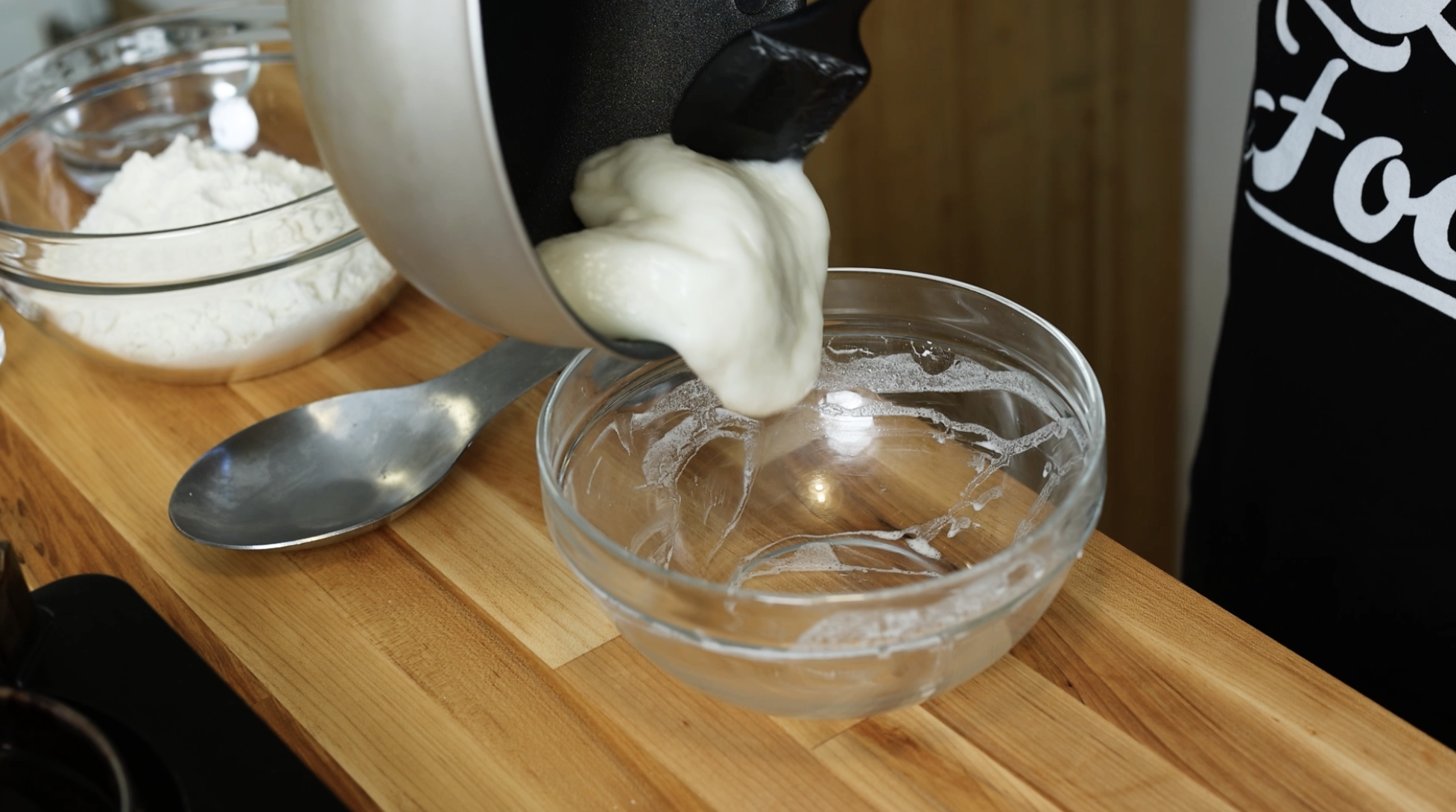
The sticky rice mixture is what makes this baguette unique. It infuses sticky rice into every bite of the bread. In this step, sticky rice flour is cooked with water and oil until it thickens into a mochi-like paste.
One important detail is cooling the mixture completely before adding it to the dough. If it’s too warm, it can kill the yeast. I like to transfer the cooked mixture to a bowl and place it in the freezer for about 30 minutes, which brings it down to the right temperature.
Make the Dough
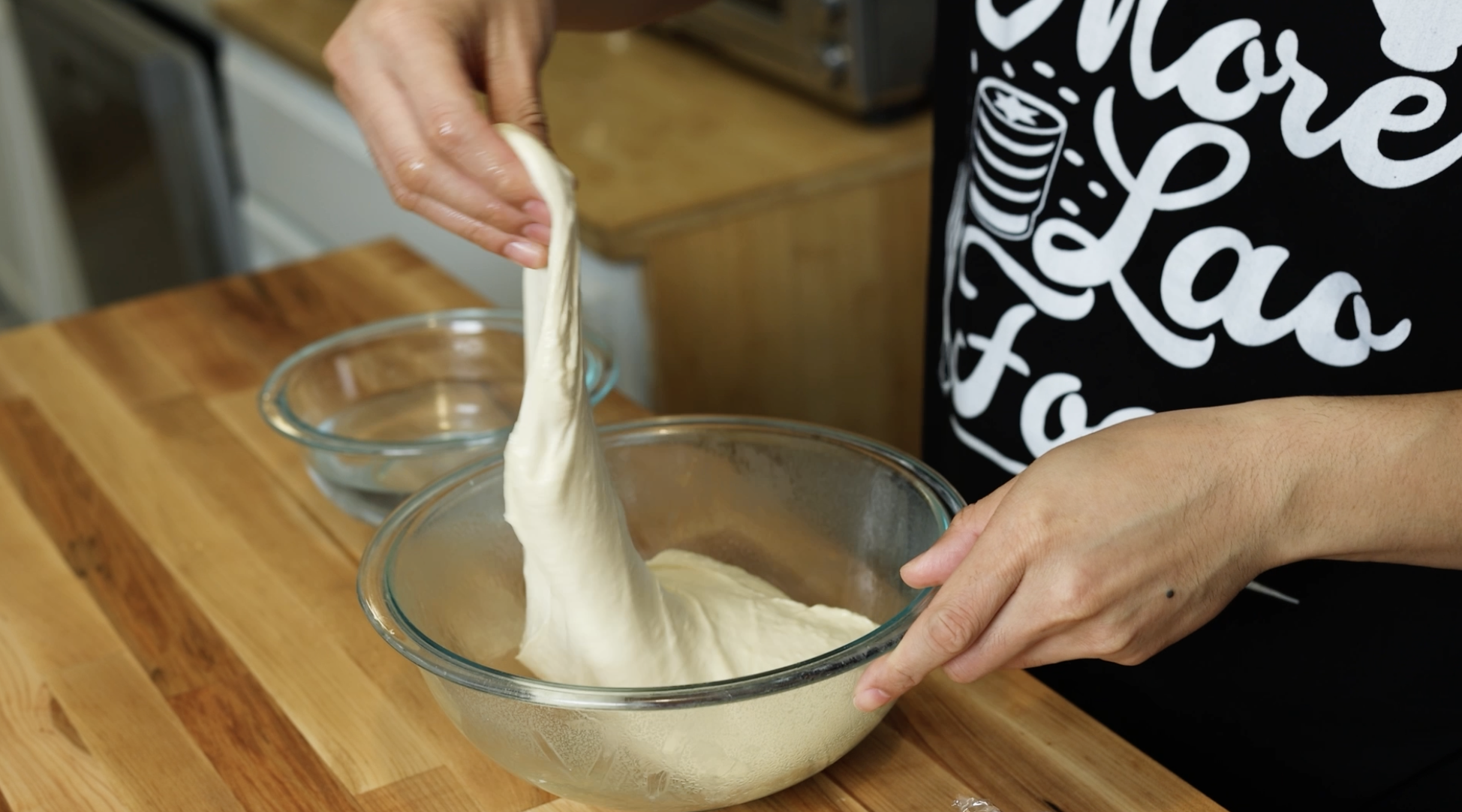
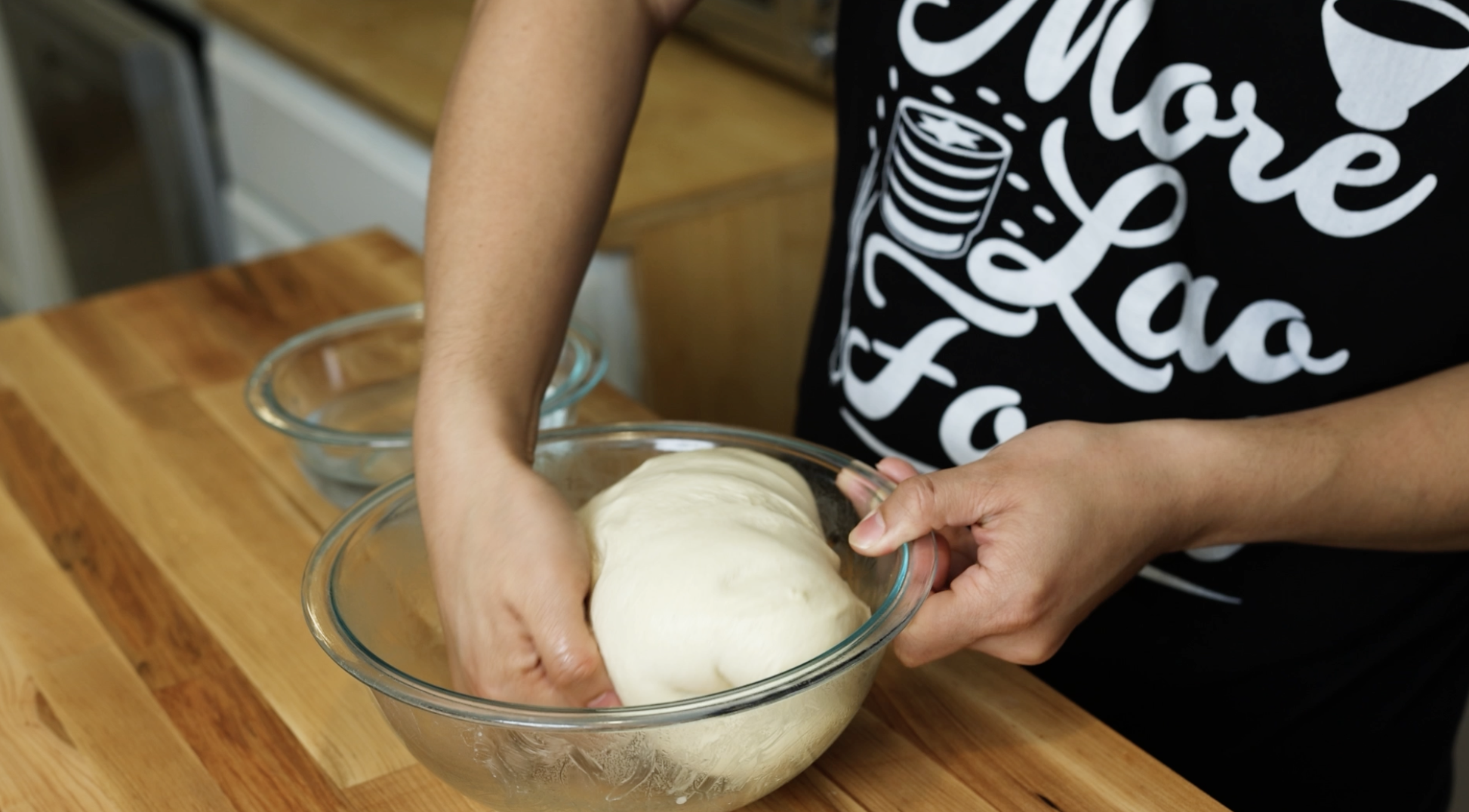
Because this dough includes a sticky rice (mochi) mixture, I strongly recommend using a stand mixer. The dough is extremely sticky and difficult to work with by hand.
I use a KitchenAid 7-quart stand mixer, which handles the combination of wheat flour and mochi smoothly without any issues.
Once the dough comes together, let it rest for about 20 minutes before beginning the folding process. For this dough, four folding sessions work well. Be sure to wait about 30 minutes between each fold to allow the gluten to relax and strengthen.
Shape the Baguettes
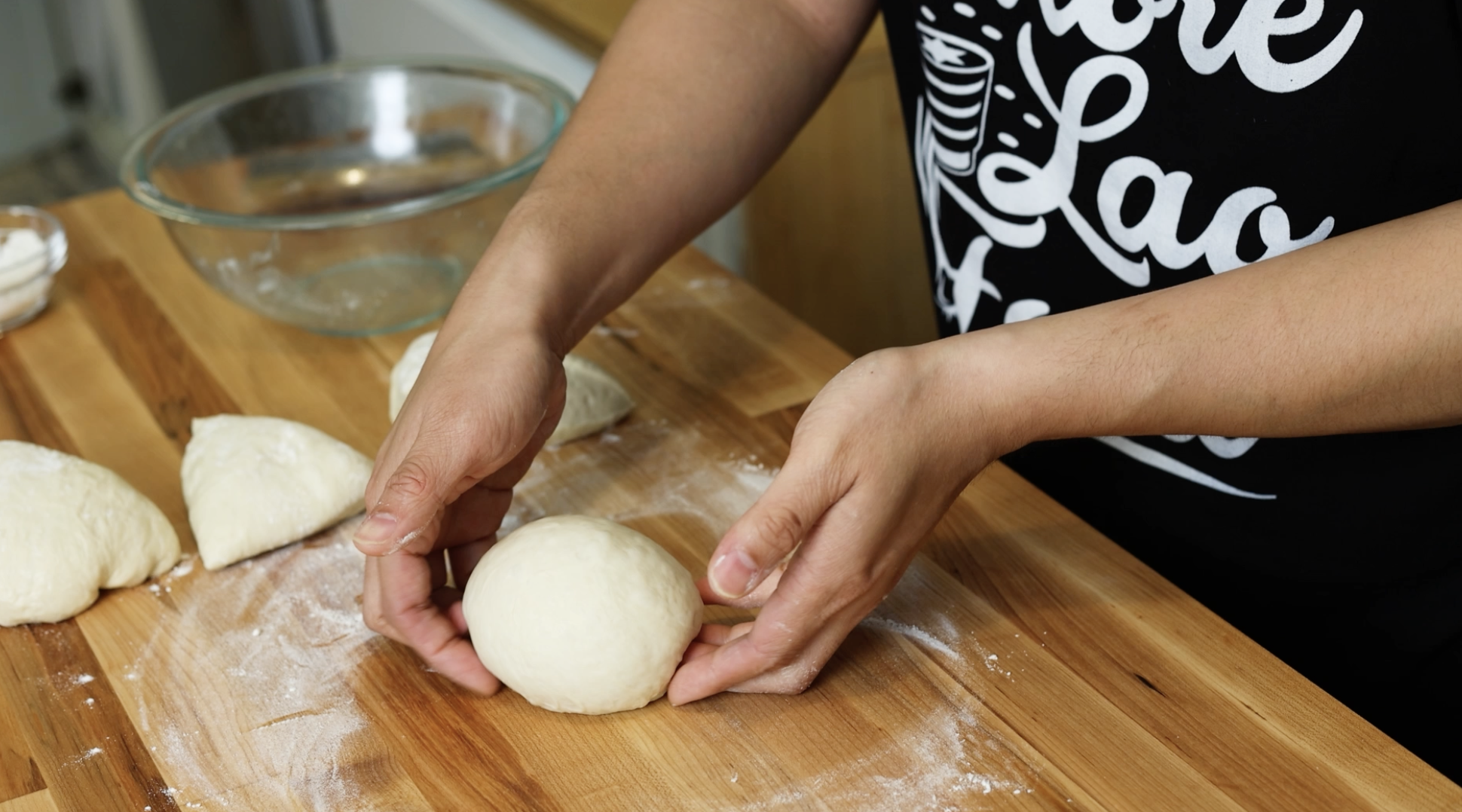
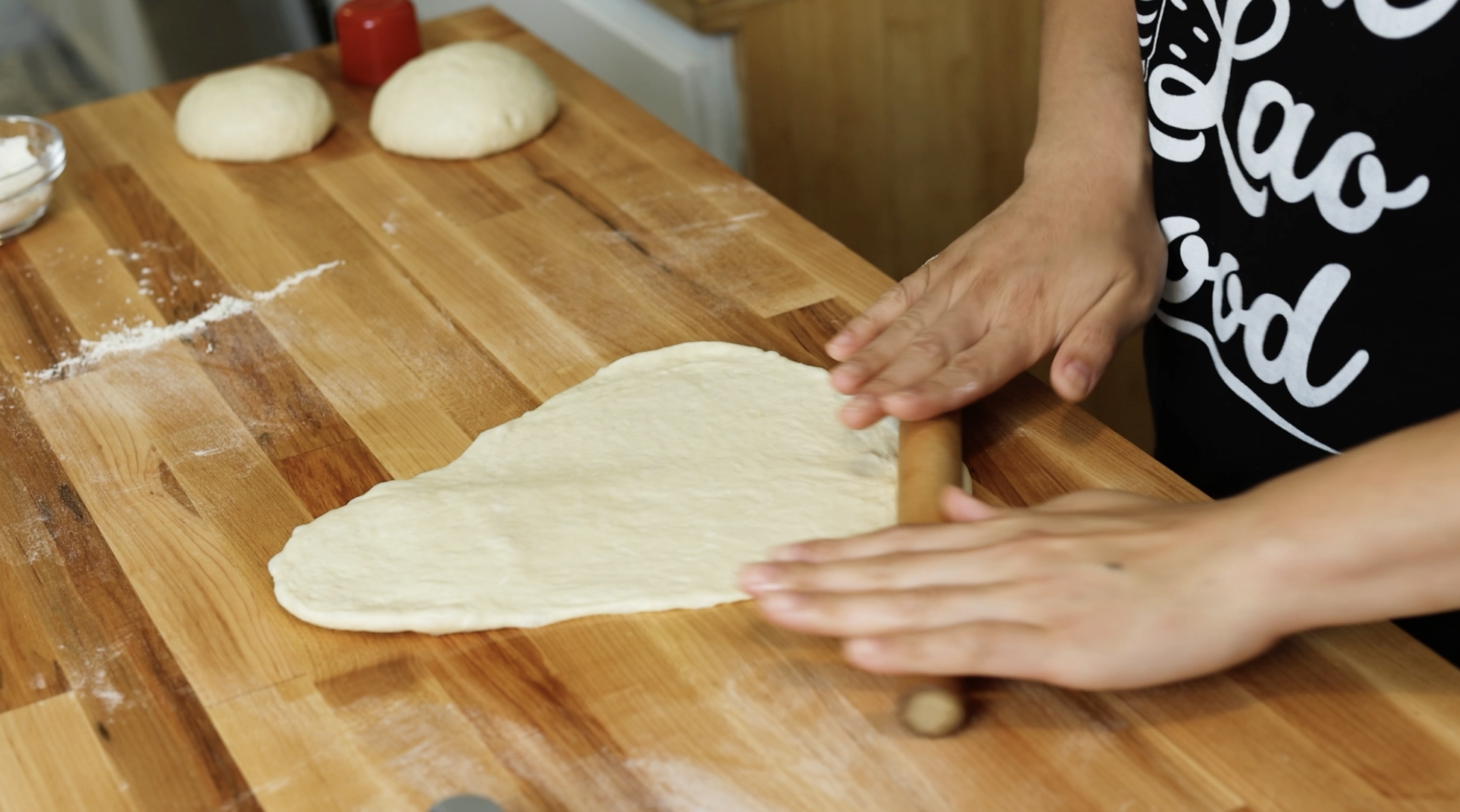
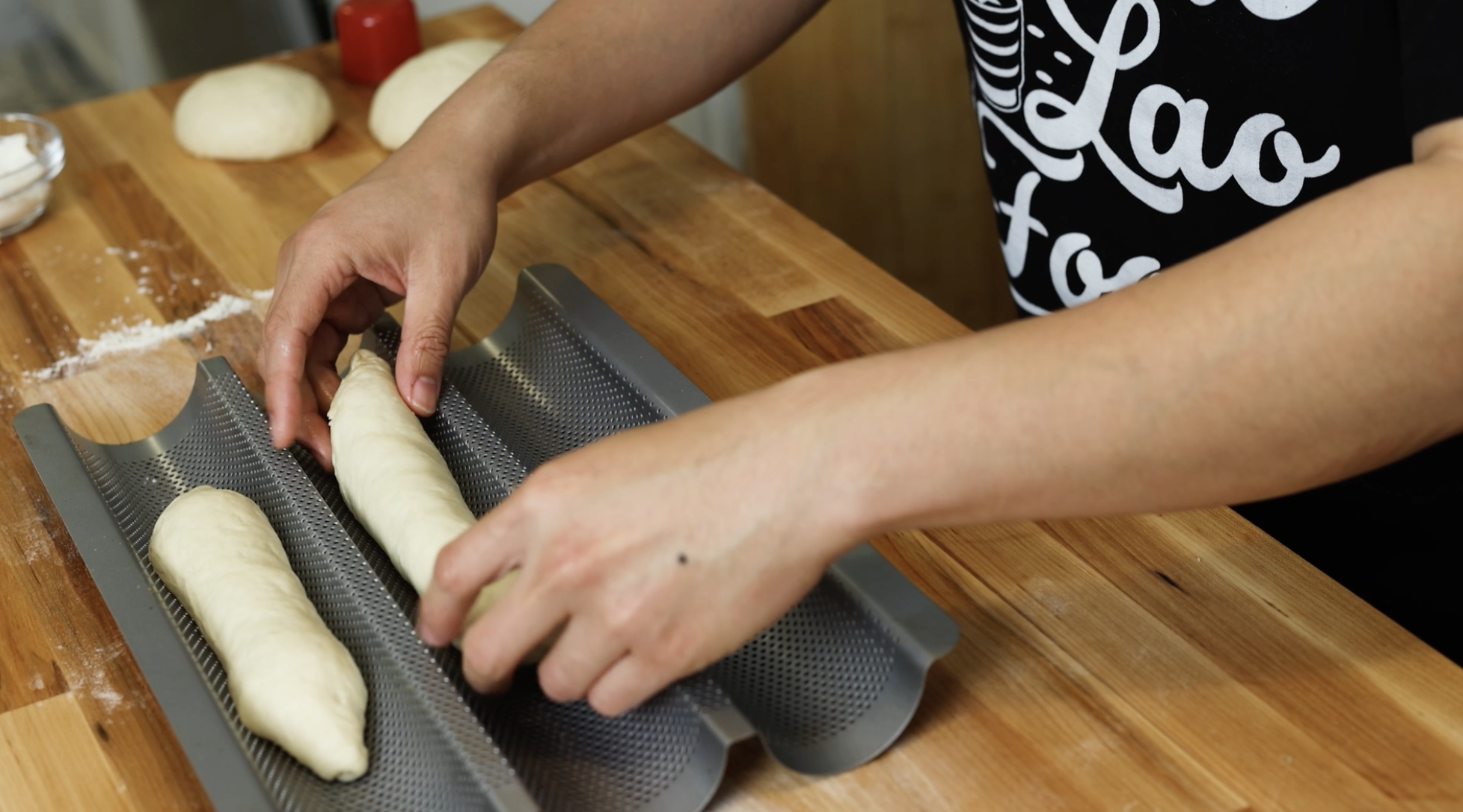
Shaping is a key step if you want evenly sized, good-looking baguettes.
Lightly dust your work surface and divide the dough into four equal portions. Shape each piece into a smooth dough ball by cupping it in your hand and rotating it in a clockwise motion.
Take one dough ball and gently flatten it, pressing out any large air bubbles. Shape it into a triangle. Starting from the top of the triangle, slowly roll the dough downward. Leave the bottom edge slightly longer so it helps form the classic baguette shape.
Place the shaped baguettes onto a tray, cover, and let them proof for about 2 hours.
Bake the Baguettes
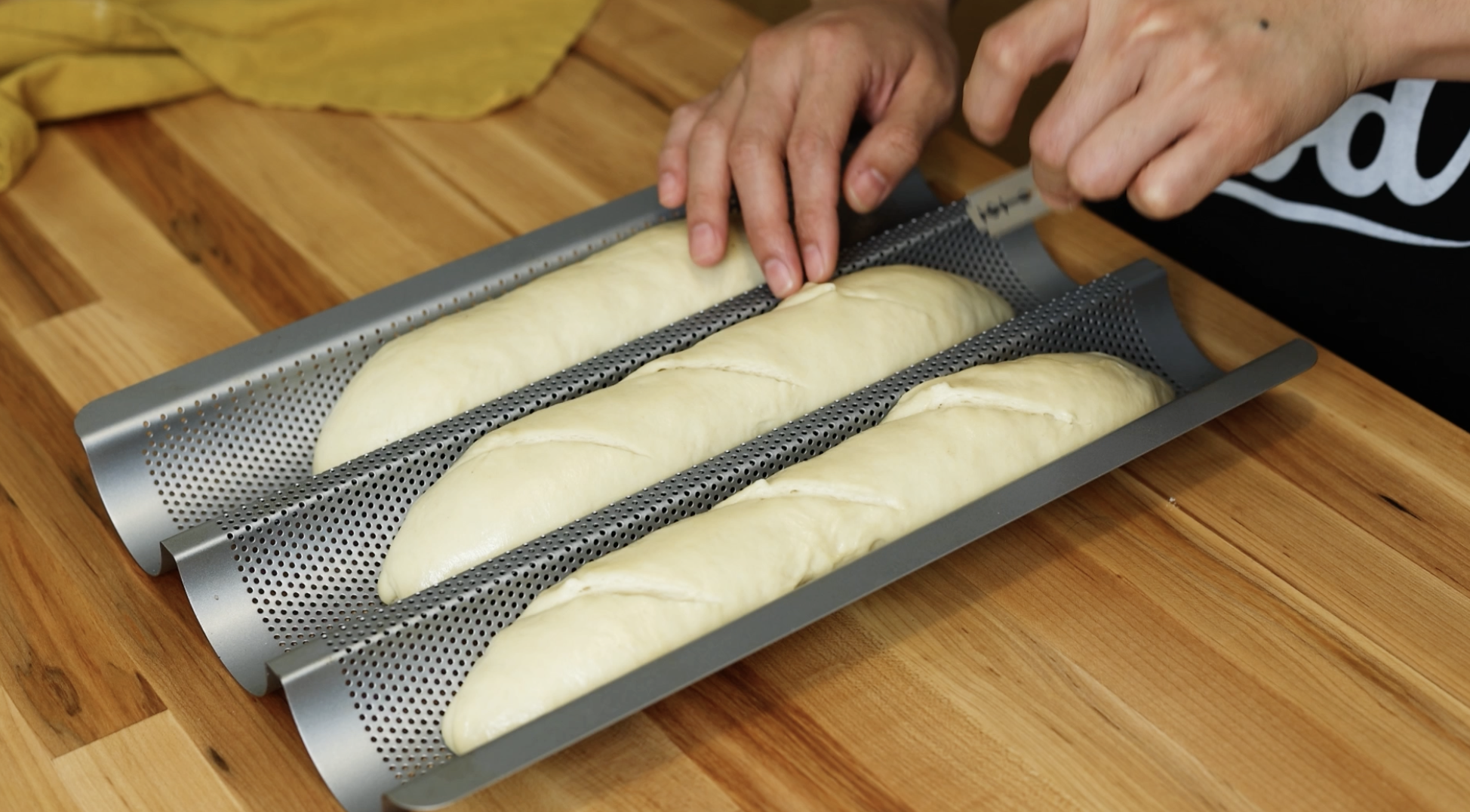
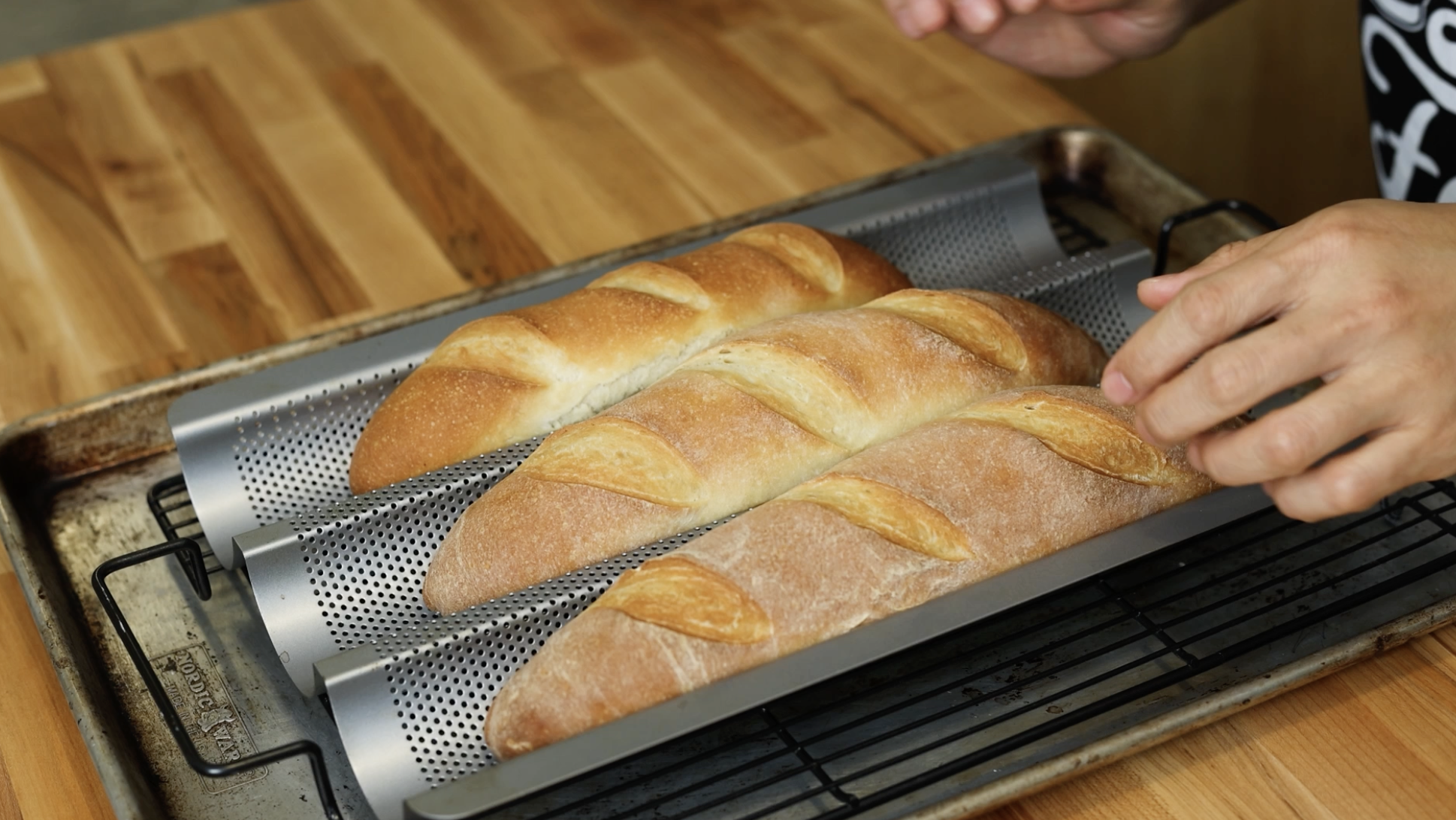
Preheat the oven to 425°F and place a pan of water on the bottom rack to create steam.
Once the baguettes are proofed, score each one with three diagonal slits. I prefer using a dough knife or lame because it stays sharp and creates clean cuts.
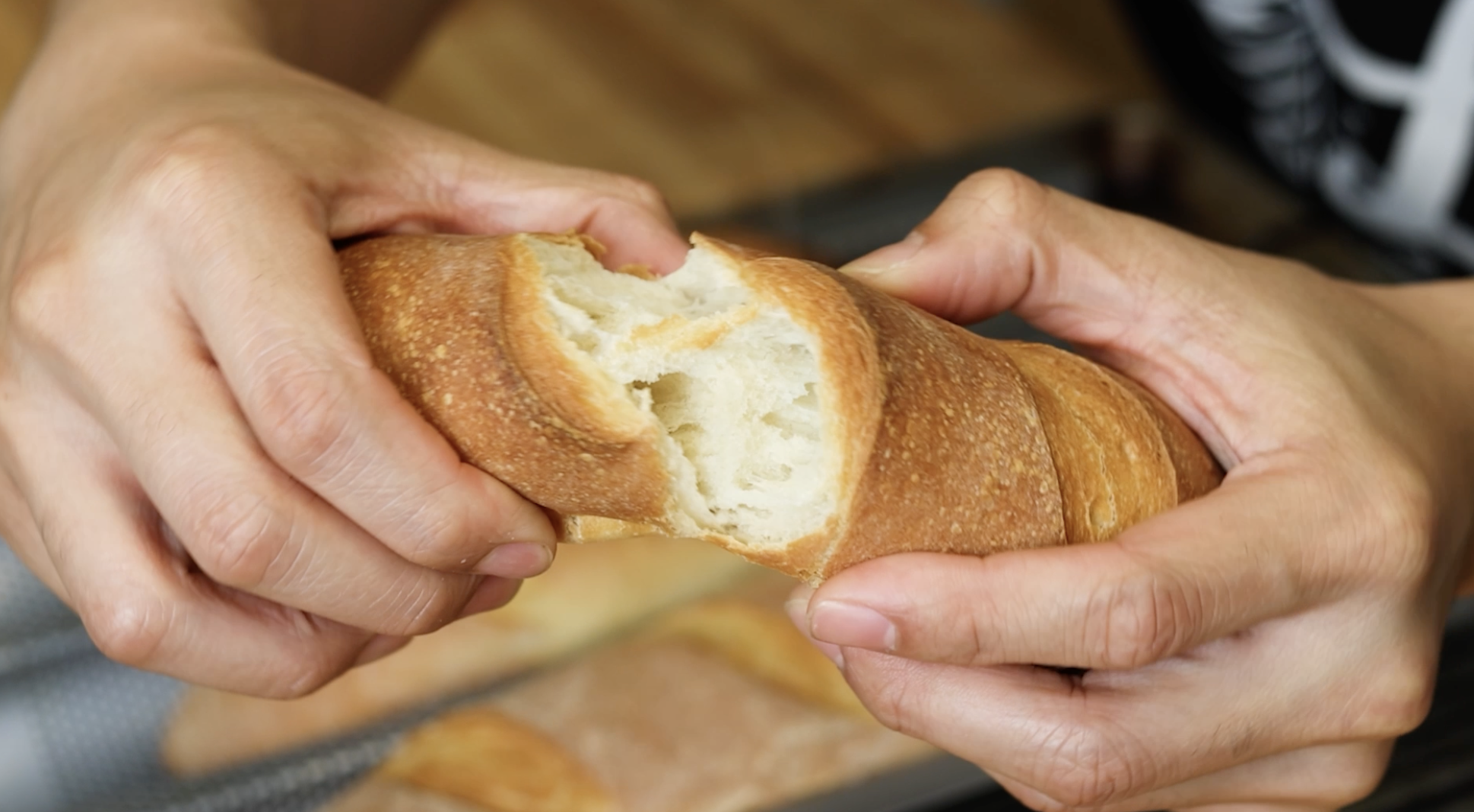
Bake the baguettes for 10 minutes. Then carefully remove the water pan and continue baking for another 12 minutes, or until golden brown. Enjoy the bread while it’s fresh—it’s especially good straight out of the oven.
Prepare the Sandwich Fillings
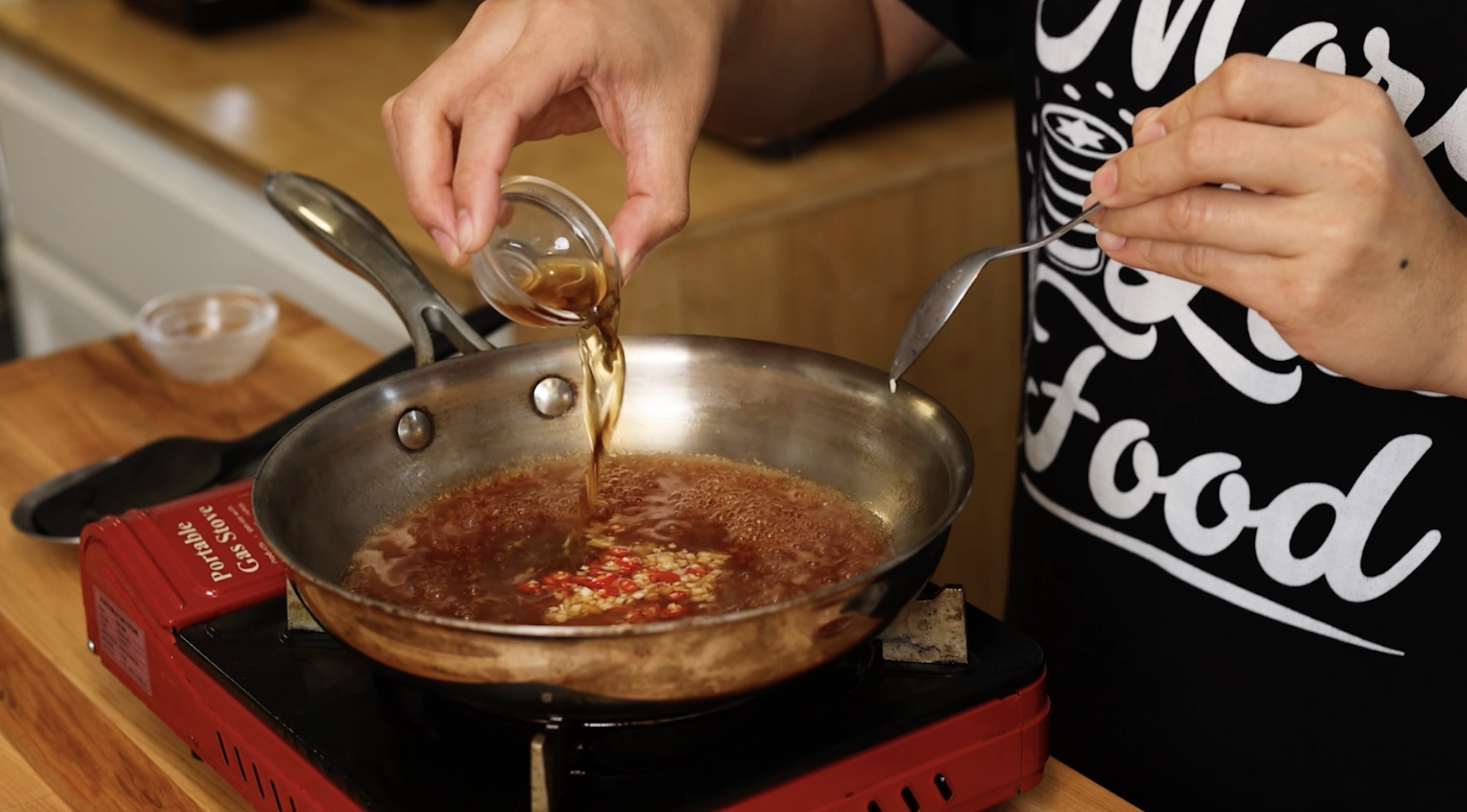
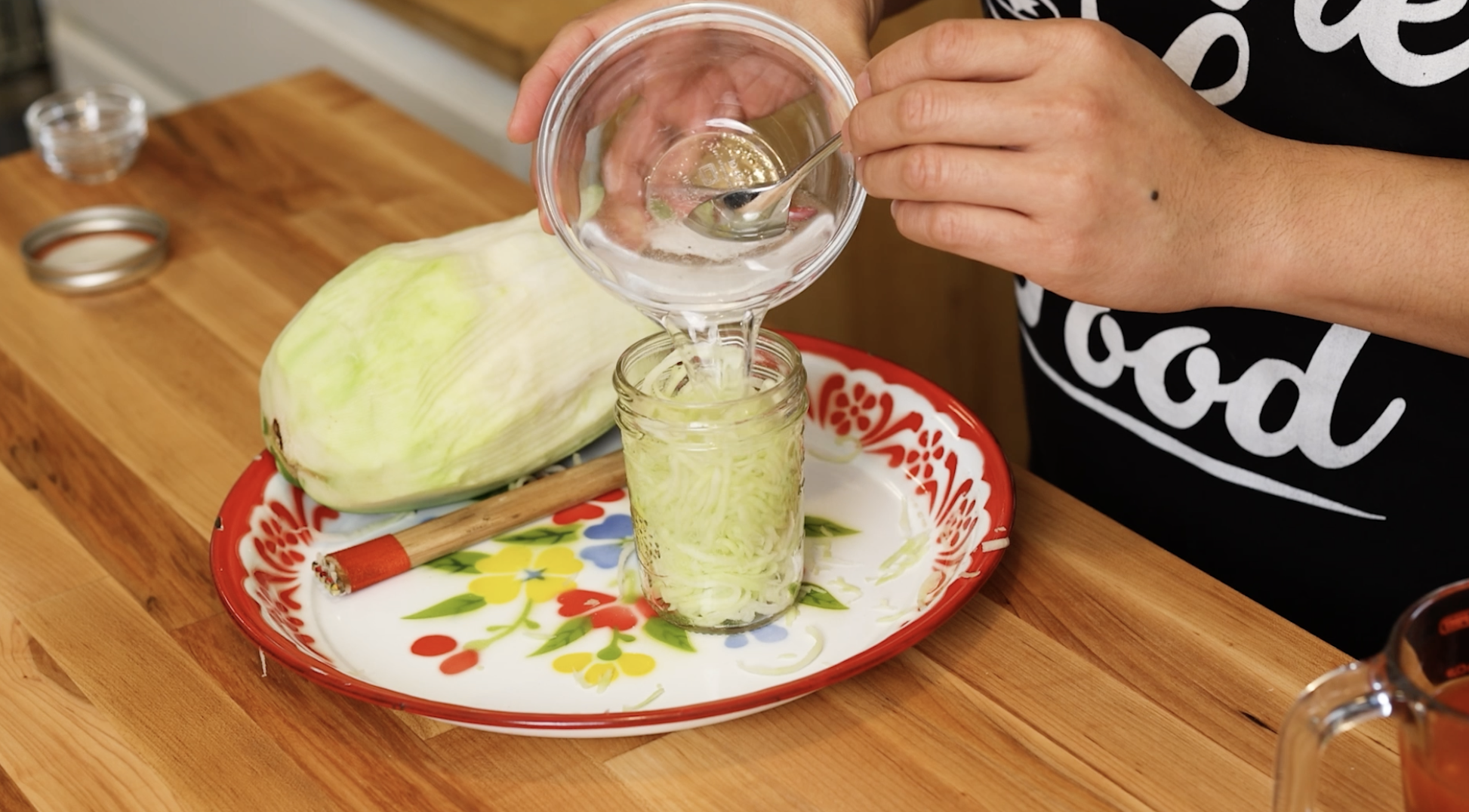
Most of the sandwich fillings should be made a day ahead.
The sauce needs to be cooked until thickened, then cooled to room temperature. The pickled papaya also benefits from sitting overnight so the vinegar fully penetrates the strands.
This sandwich has several components, so plan ahead and do a full grocery run if you’re using store-bought items like pâté or jeow bong.
Cook the Lao Sausage Mixture
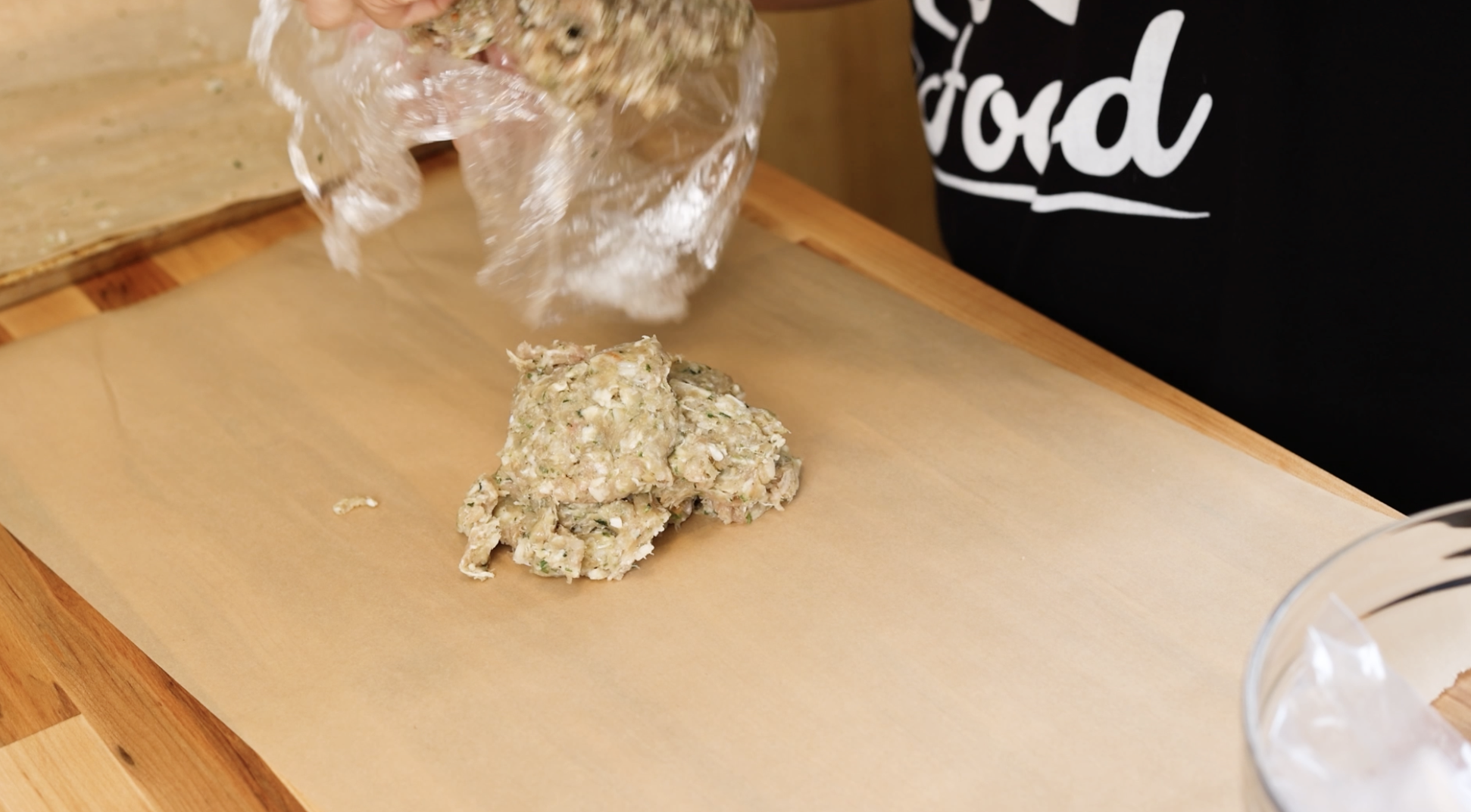
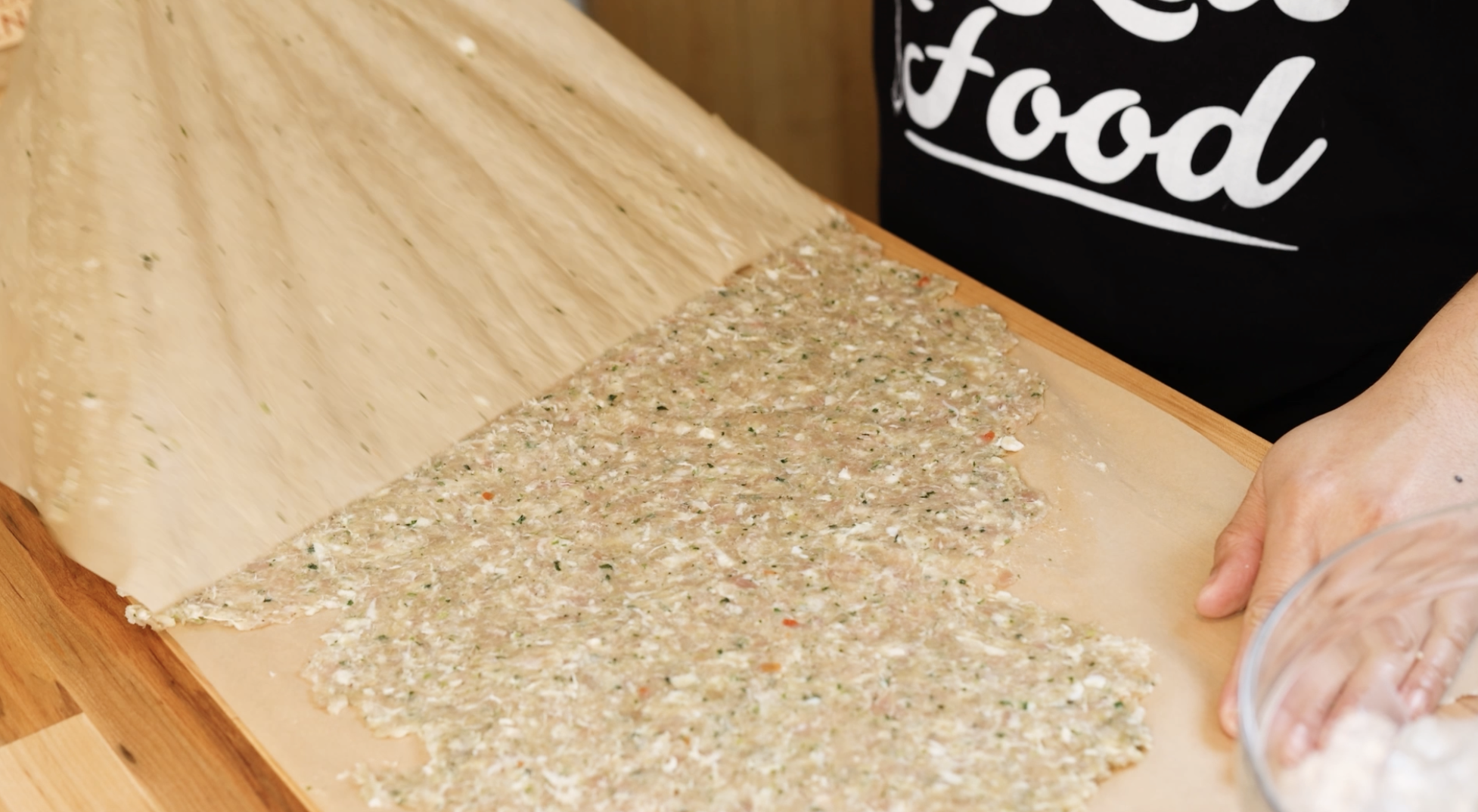
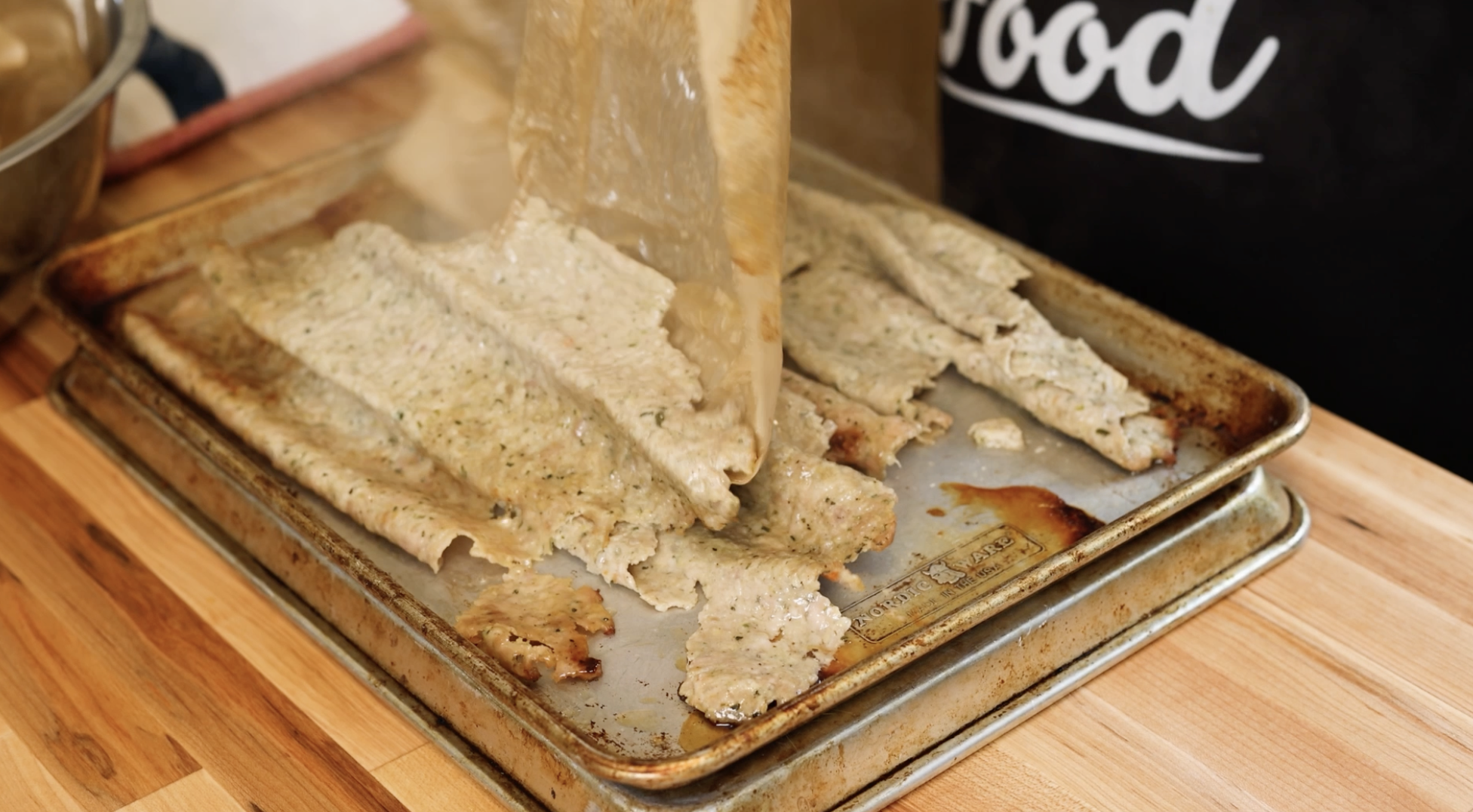
One of my favorite elements of this sandwich is the Lao sausage mixture. You can shape and cook it as meatballs or form it into a sausage and slice it.
I went a different route by spreading the mixture onto parchment paper and rolling it tightly into a thin log, almost like a doner kebab. Once cooked, it slices beautifully and works perfectly in the sandwich. I highly recommend making extra.
Assemble the Sandwich
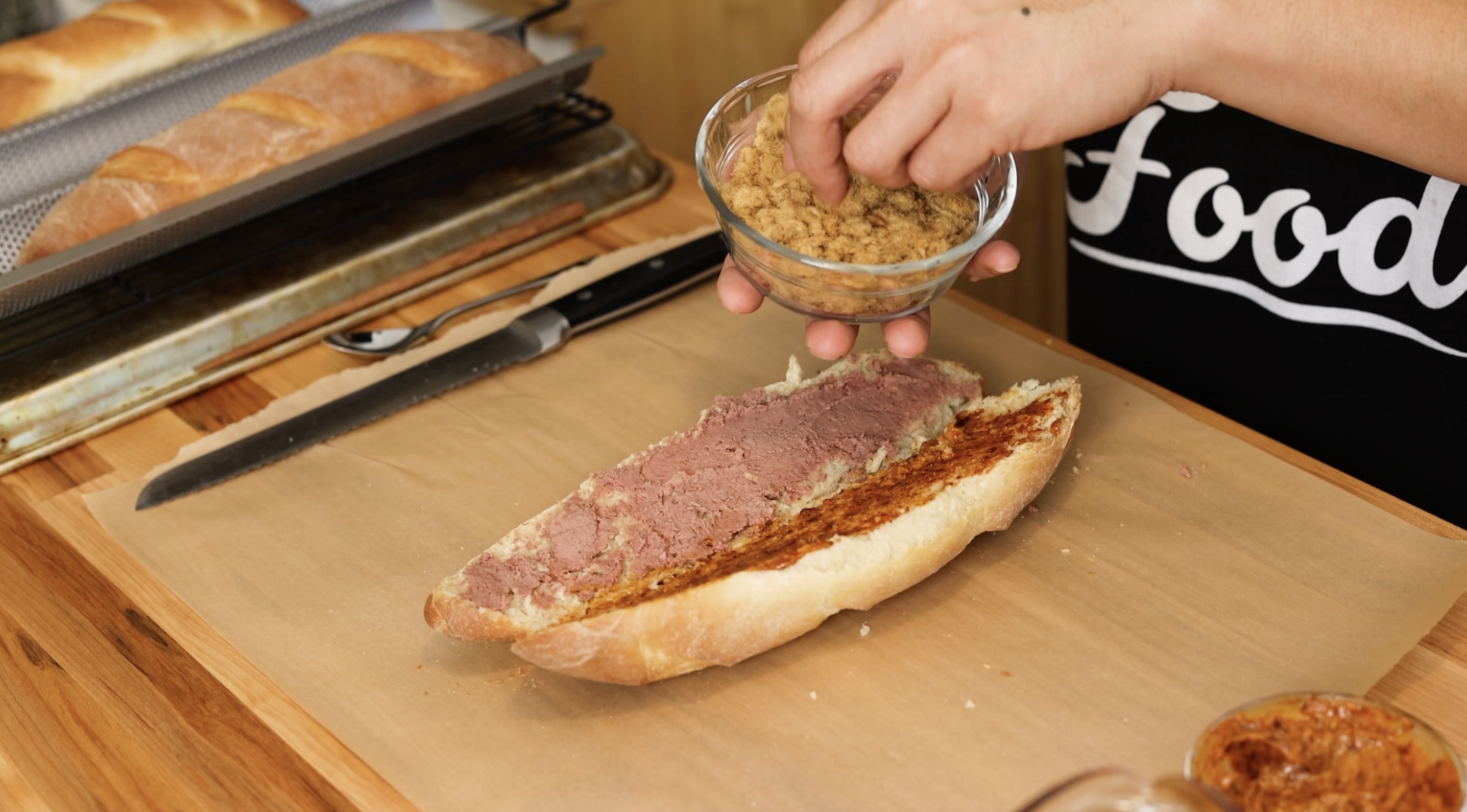
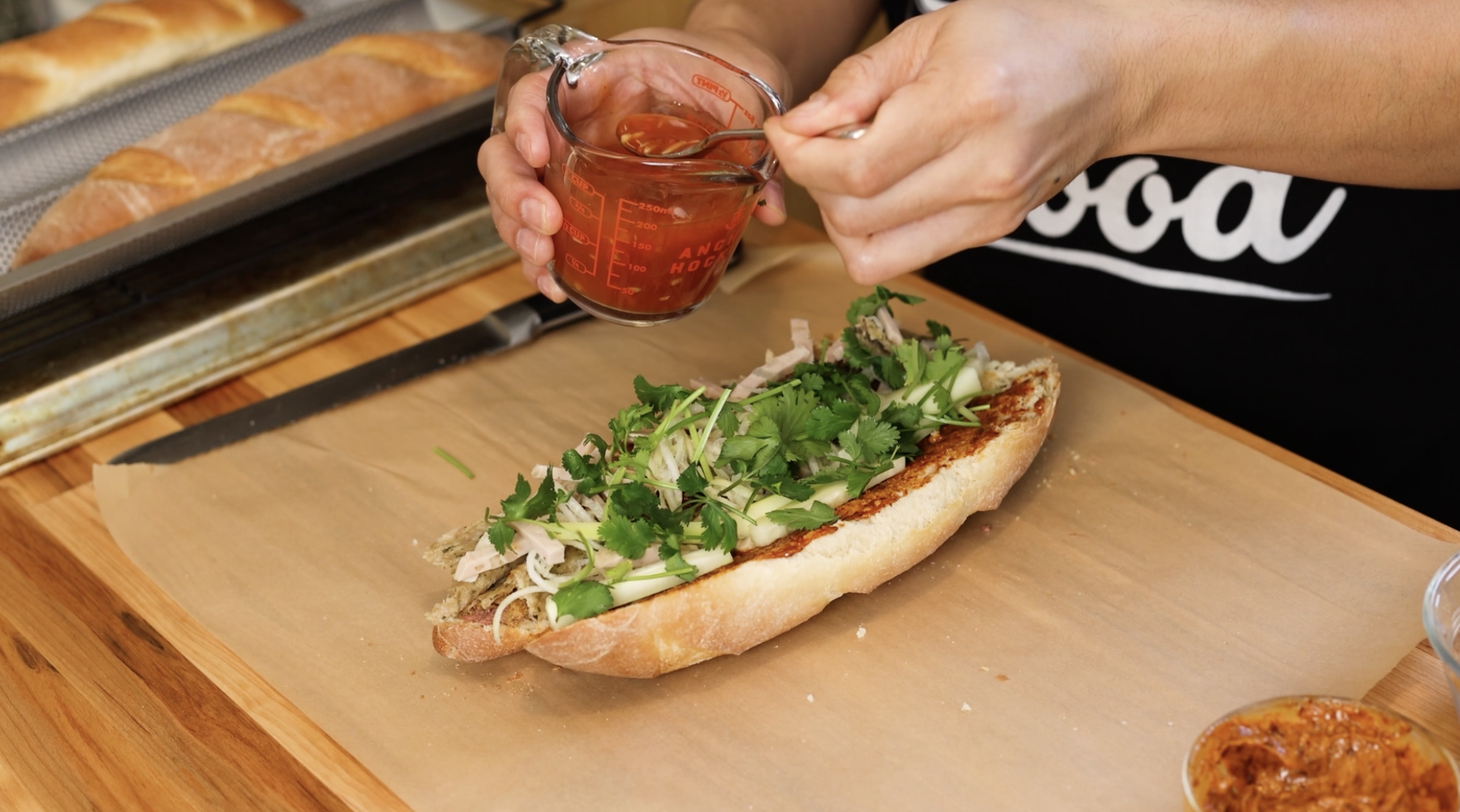
Start by spreading pâté and jeow bong aioli on the baguette. Add pork floss, the cooked sausage mixture, and matchstick-cut Southeast Asian ham.
From there, add fresh cilantro, sliced cucumbers, and finish with a drizzle of sweet and spicy sauce. These are my preferred fillings based on how I’ve eaten khao jee pâté in Laos and what best captures those flavors.
How Long Will It Last?
I like assembling the sandwiches a day ahead. When ready to serve, simply warm them in the oven so the bread crisps up again.
Stored in the refrigerator, the sandwiches will keep well for 3 to 4 days.
Where can I get more Lao recipes?
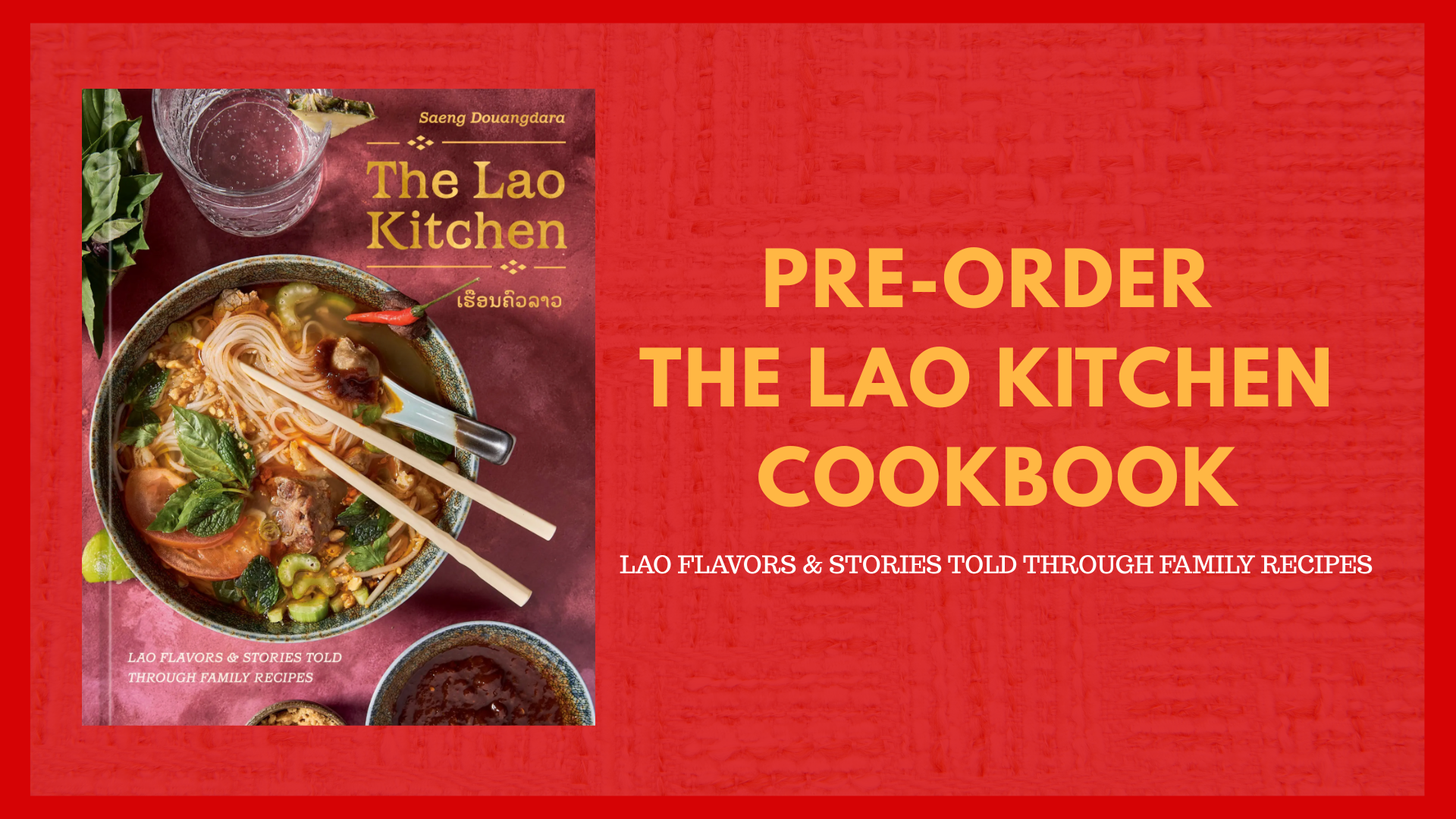
If you enjoyed this recipe, chances are you love Lao food. My website is filled with traditional, modern, and fusion Lao recipes, so I hope you take some time to explore everything it has to offer. When you try a recipe, leaving a rating and a comment on that specific page helps more home cooks discover and trust it. And if you want ad-free, refined recipes, please consider pre-ordering my debut cookbook, The Lao Kitchen. It’s jam-packed with over 95 recipes, personal stories, and rich Lao food history.
More Lao Recipes

Lao Sandwich | Khao Jee Pâté
Learn how to make the Lao sandwich Khao Jee Pâté with a sticky rice baguette, spicy sauce, jeow bong aioli, pickled green papaya, and Lao sausage. This traditional Lao street food recipe explores the history and French influence behind this iconic sandwich from Laos you can make at home.
Ingredients
Instructions
- Make the sticky rice paste: In a saucepan, whisk together the sticky rice flour, water, and oil until smooth. Cook over medium heat, whisking constantly, for 4–5 minutes until thick and paste-like.
- Transfer to an oiled bowl and place in the freezer for 30 minutes to cool completely.
- Bloom the yeast: In a small bowl, combine the warm water and yeast. Let bloom for 5 minutes until foamy.
- Mix the dough: In a stand mixer bowl, whisk together the bread flour and salt. Add the yeast mixture and mix with a spatula until a rough dough forms.
- Add the cooled sticky rice paste and knead with the dough hook on speed 4 for 5 minutes. After 3 minutes, stop the mixer, scrape down the sides, then finish the remaining 2 minutes of kneading.
- First rise: Lightly oil a large bowl. Place the dough inside, cover tightly with plastic wrap, and let rise for 20 minutes.
- Folding process: With wet hands, fold the dough over itself 4 times. Cover and let rise for 30 minutes. Repeat this folding and resting process three more times (4 folds every 30 minutes).
- Divide and rest: Lightly flour your work surface and the top of the dough. Turn the dough out and divide into 4 pieces, about 230 g each. Shape into balls, lightly flour the tops, cover with a towel, and rest for 15 minutes.
- Shape the baguettes: Take one dough ball, gently degas it, and stretch into a rectangle. Roll tightly into a baguette, sealing the seam well. Gently taper the ends for a thin baguette shape.
- Final rise: Let the shaped baguettes rise for 2 hours until puffy.
- Bake: Preheat the oven to 425°F (convection) with a water bath placed on the lower rack. Score each baguette once. Bake for 22 minutes total: First 10 minutes with the water bath, spraying the dough with water. Last 12 minutes with the water bath removed
- Reheat (optional): To reheat, bake at 350°F for 5 minutes.
Notes
Assemble Lao sandwiches with:
4 baguettes
Pate
Jeow bong aioli (2 tbsp jeow bong + 3 tbsp kewpie mayo)
Lao sausage patty (400F for 30 mins)
Pork floss
Cilantro, roughly chopped
Cucumber, thin slices
Pickled Papaya, thinly shredded
Pork ham (moo yaw), matchsticks
Spicy jeow wan




Sabaidee, I’m Saeng!
I’m a personal chef who specializes in Lao food. Here at Saeng’s Kitchen, you’ll find all your favorite traditional Lao foods and also some new twists to Lao style dishes.